The floor moves before the door does
Asheville NC sits above 2,000 feet, and the red clay that underlies much of Buncombe County does something predictable every year: it absorbs the fall rains and swells, then pulls back as summer dries it out. A manufactured or mobile home on a pier foundation sits directly on that cycle. The chassis, the wall framing, and every door opening in the home ride that movement whether or not the homeowner notices it happening.
When a pier settles into soft ground or heaves during a hard freeze, the steel chassis the home rests on twists in response. That twist transfers into the wall framing, and the wall framing distorts the door rough opening. A door that used to close clean and now catches at the top corner or drags along the bottom is not a door problem — it is a pier problem that shows up first at the door frame.
What mountain soils and storm seasons do to pier footings
The Asheville NC area adds two factors that flatland manufactured home sites rarely face at the same intensity. First, freeze-thaw: parts of Buncombe County regularly drop below freezing between November and March, and water in the soil under concrete pier pads expands as it freezes. A pad that was level in October can be a quarter-inch off by April. Over several seasons that differential accumulates in the door frame before it shows up anywhere else.
Second, storm loading. Buncombe County has seen 19 federally declared disasters across 1973-2026, including hurricanes in 2023, 2021, and 2020, a tropical storm in 2024, and a winter storm in 2026. Each event saturated the soil around footings that were originally set in drier conditions. The National Weather Service tracks the precipitation patterns that drive this process; the pier footings track the results in concrete and clay. Any manufactured home that sat through that run of declared events on its original-setup piers is a strong candidate for a level check before the next door binds.
What a homeowner can safely check before calling a crew
A homeowner can gather useful diagnostic information without going under the home. Start with the door gap itself: close the door slowly and watch which corner closes last. Top-corner binding usually means the near side of the frame has dropped; bottom-drag on the latch side usually means the opposite corner has risen. That geometry tells you roughly which end or section of the floor needs attention before anyone pulls up skirting.
Walk through the rest of the home and test every interior door. If only one door sticks, the problem may be local — one or two piers at that end of the home have shifted. If two or three doors in separate rooms all bind, the chassis carries a twist along its length, which typically means a full re-level rather than a spot correction. Cracks at wall-ceiling junctions, especially above door and window openings, are another sign that the frame is reacting to chassis movement rather than isolated settling.
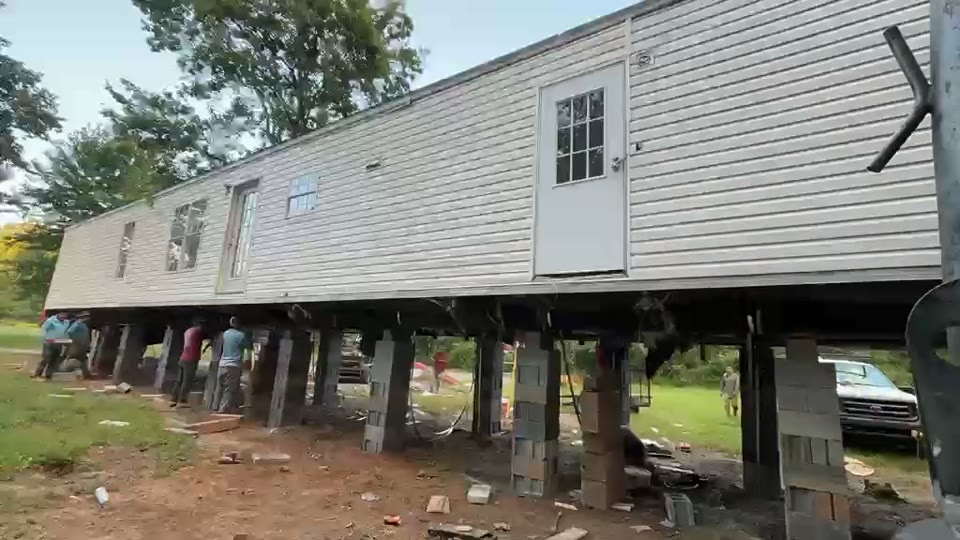
From outside the skirting, look through the vents for obvious pier problems: a block shifted off its footing pad, a wood post with visible rot at the base, or bare dirt where a pad should sit. Any of those is a crew call, not a homeowner inspection item.
When the symptom calls for a licensed installer in NC
North Carolina requires manufactured home installation and alteration work — including re-leveling — to be performed by a licensed installer under the NC Manufactured Housing Board, which operates under the NC Office of State Fire Marshal. Re-leveling is an alteration to a home's support system, and it falls squarely under that licensing framework. Work performed by an unlicensed crew sits outside the inspection process and can affect the home's insurability.
The clearer red flags for calling immediately rather than watching: a crack that appeared at a wall-ceiling junction above a door opening this season, a floor that has developed a new soft spot in a spot that was firm last year, a door that went from slightly sticky to fully inoperable within a few months, or any pier that is visibly out of plumb when viewed through the skirting vents. These are structural symptoms that a level-check alone will not resolve; the underlying cause needs to be identified before a new level is set.
What repairs typically cost in Buncombe County
The ranges below reflect typical market pricing for the Asheville NC area and surrounding Buncombe County. Actual quotes vary by access, home age, pier count, and whether drainage correction or pad replacement is needed alongside the leveling work. See the full NC leveling cost breakdown and the Asheville-specific leveling guide for more detail on the line items that drive price in this market.
| Scope | Typical Range |
|---|---|
| Inspection and minor adjustment (1–3 piers) | $300 – $600 |
| Full re-level, single-wide | $600 – $1,200 |
| Full re-level, double-wide | $900 – $1,800 |
| Pier pad replacement (per pad) | $100 – $250 |
| Chassis blocking correction with re-level | $800 – $1,600 |
For most sticking-door calls, the repair lands somewhere in the minor-adjustment to full single-wide range. Homes that sat through multiple storm seasons without a level check, or that show soft subfloor areas alongside the sticking doors, often need pier-pad and blocking work on top of the re-level itself. The re-leveling service page covers what a proper job includes and which questions to ask any crew before signing.
How federal setup standards define what level means here
The federal standard for manufactured home installation — including pier spacing, footing dimensions, and anchor requirements — is administered by the HUD Office of Manufactured Housing Programs. Buncombe County falls in HUD Wind Zone I under 24 CFR 3280.305, the baseline exposure classification. That designation sets the minimum pier count and tie-down pattern for a correctly installed home — which also means it establishes the target state a re-level is trying to return the home to.
A home that was installed correctly under that standard and has since developed door problems has almost certainly experienced pier movement since original setup. That is the expected outcome on Buncombe County's clay soils after a decade of mountain weather and the recent run of storm events. The repair is returning the chassis to the level the original installation achieved — that is what a re-level does, and it is the right starting point before any door hardware gets replaced or any framing work gets ordered.