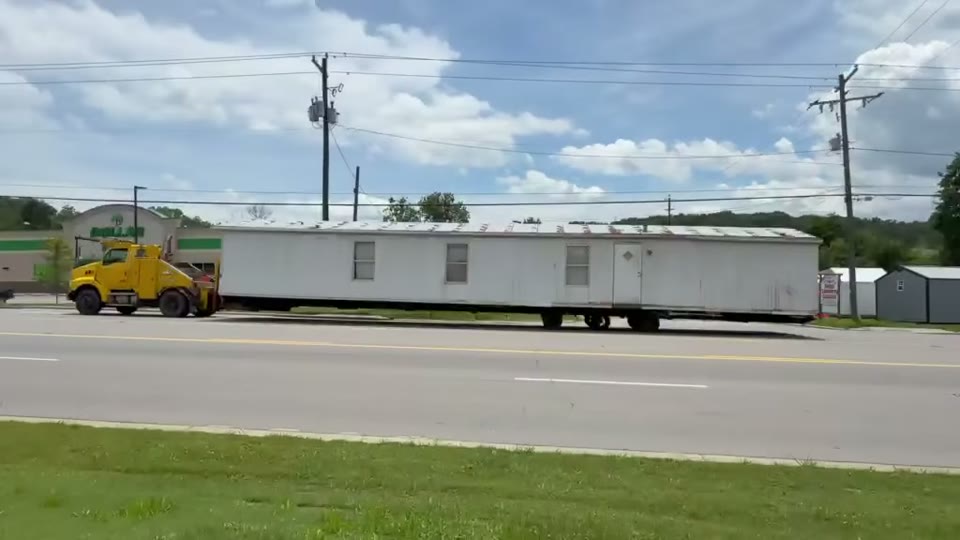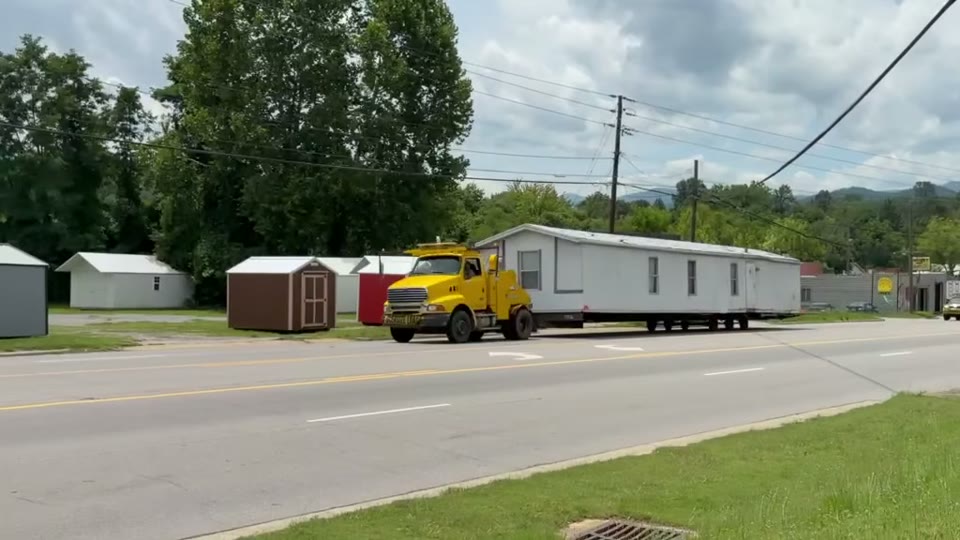
Canton is a valley town on ridge roads, and both shape every move
Canton, NC sits where the Pigeon River bends through a tight valley, with long ridges rising on each side and I-40 and US-19/23 carrying the main traffic west from Asheville NC into Haywood County. Manufactured housing is common here — the housing stock around Canton reflects the working character of a mill town, with homes on flat river-bottom parcels, on old agricultural bottomland, and on the narrow spur roads that climb away from the valley floor.
Those two settings produce different moves. The flat valley lots are generally accessible, but the lane from the road to the pad can be a rutted pull-off that hasn't seen a transport rig since the original delivery. The ridge sites require a pre-move look at the approach: overhead clearance at the utility service drop, grade on the last stretch of road, and whether the turn radius at the lot entrance will accommodate a full-length home. A crew pricing a job without walking those approaches is pricing it blind.
Canton is one of the higher-volume corridors covered in the guide to mobile home moving in western NC — the terrain and carrier patterns that apply here are consistent with the broader mountain county picture.
What a move costs around Canton
The ranges below are typical for the Haywood County market. They cover transport only — utility disconnect at the origin and reconnect, blocking, leveling, and anchoring at the destination are separate scopes that belong in an itemized quote.
| Scope | Typical Range |
|---|---|
| Single-wide, local move (under 30 miles) | $3,000 – $5,500 |
| Single-wide, longer haul or difficult access | $5,500 – $8,000 |
| Double-wide, local move (under 30 miles) | $7,000 – $10,500 |
| Double-wide, longer haul or difficult access | $10,500 – $15,000 |
| Blocking, leveling, and utility reconnect | Separate — request itemized quote |
| Anchor and tie-down installation | Separate — required at every new site |
What moves a job toward the upper end: ridge approaches at either site, distances over thirty miles, a lot that needs grading or pad work before the home can be positioned, and permit routes that trigger escort requirements. What holds a job at the lower end: a flat valley-to-valley move on paved state roads with clear lot access at each end. Full setup at the destination is covered in mobile home set-up and installation.
Route and lot questions before the truck leaves
Two site visits matter before any Haywood County move: one at the origin and one at the destination. Overhead clearance at utility service drops is a common obstacle on ridge approaches — a line that clears a pickup truck may not clear a home on a transport frame. Tight turns at lot entrances, soft shoulders on state roads, and narrow bridges on secondary county routes are all things a pre-move survey finds before they become day-of problems.
North Carolina requires a transport permit for any manufactured home moved on public roads. The NCDOT oversize permit process for manufactured homes (Publication MH-2) covers routing requirements and the conditions under which a pilot car or escort is required. For Haywood County moves using I-40 or US-19/23 for the main haul, the permit route is typically straightforward; connections onto smaller state routes and private drives need individual review and approval before the permit issues.
Permit applications take time. Submitting late is one of the most consistent reasons Canton moves slip by a week. Build permit lead time into the schedule before booking a moving crew.
The paperwork every Haywood County move requires
Three documents must be in hand before a manufactured home can legally move in North Carolina.
The NCDOT transport permit covers the road move itself. The tax-paid moving permit is a separate state requirement: under NCGS Chapter 105, Article 18, any outstanding property taxes on the home must be satisfied and documented before a move can proceed. The county tax office issues that clearance; allow several business days. The county placement permit authorizes the installation at the destination and triggers the site inspection.
Haywood County's permit steps for manufactured home placement were not confirmed at publication. Call the county permit office before scheduling the move — ask specifically what is required for the parcel, what documentation the installation crew must carry on site, and how to schedule the final inspection. That call takes fifteen minutes; discovering a missing requirement on move day costs much more.
The NC Manufactured Housing Board, operating under the NC Office of State Fire Marshal, licenses the contractors who may legally install manufactured homes in North Carolina. Installation at the destination requires a licensed contractor — that is what makes the placement inspectable and the permits closeable.
The set at the new site, and why anchoring matters in this county
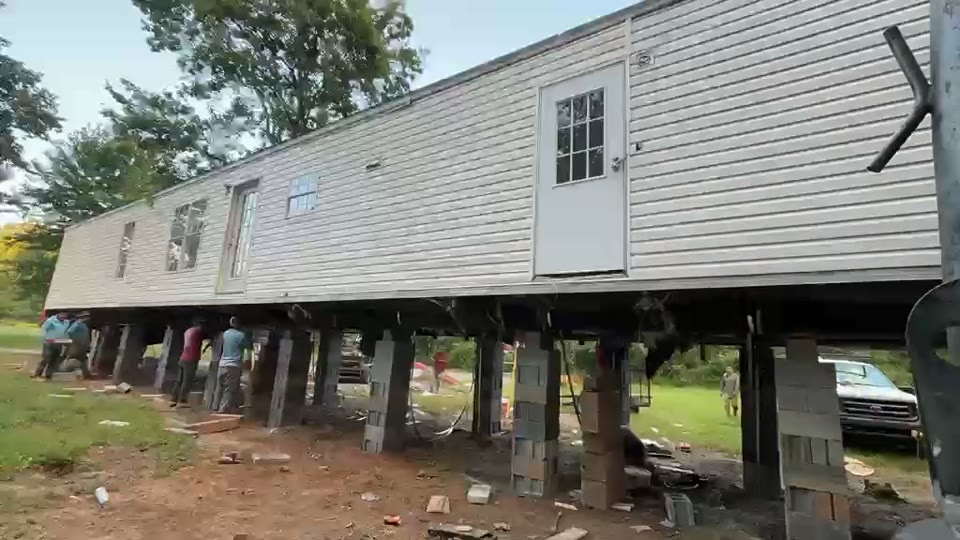
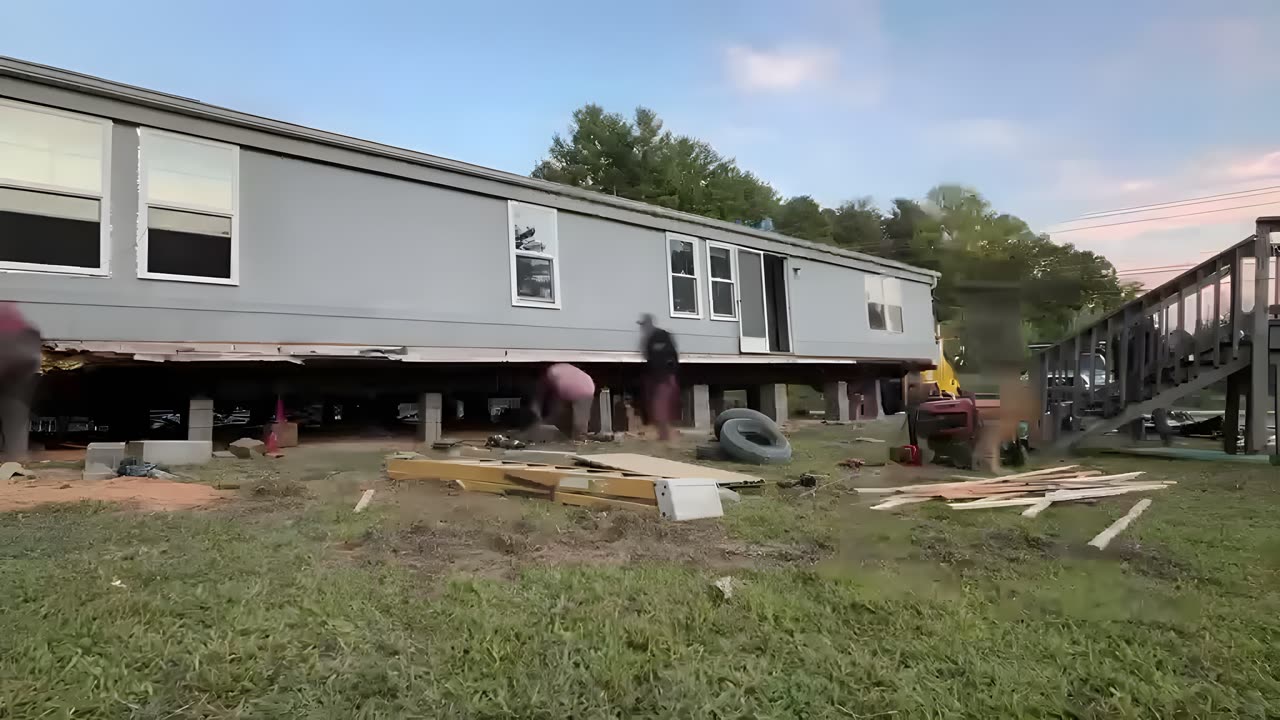
A move ends when the home is blocked, leveled, and anchored at the new lot. Haywood County falls under HUD Wind Zone I per 24 CFR 3280.305, the minimum design standard that governs both the home's frame and the anchor and tie-down system that holds it to the ground. Wind Zone I is the lowest-intensity classification, but it is not a low-risk one in this county: Haywood County has had 19 federally declared disaster events over 1973-2026, including hurricane, tropical storm, and winter storm events in 2020, 2021, 2023, 2024, and 2026. Anchors installed to code, documented and inspected, are the difference between a home that weathers those events and one that doesn't.
Ask the installation contractor for a written anchor schedule — type, count, spacing, and strap configuration — before they leave the site. That document is the first thing an insurance adjuster asks for after weather damage, and it matters again if the home is ever moved a second time.
Some settling after a new placement is normal as the home adjusts to fresh blocking over the first season. Homes that have been moved and re-sited more than once are worth evaluating on anchor condition before the next storm season. See mobile home re-leveling for what a proper post-move level and anchor inspection covers.