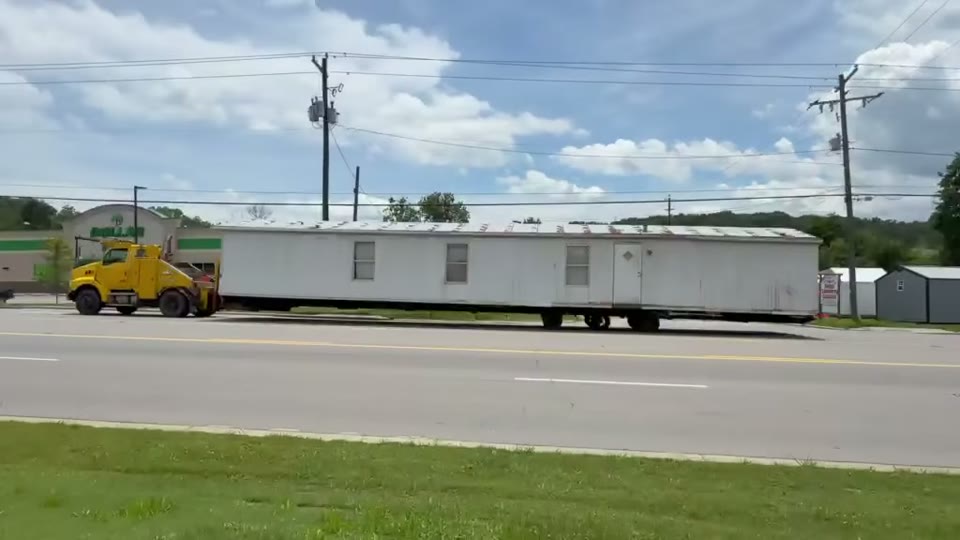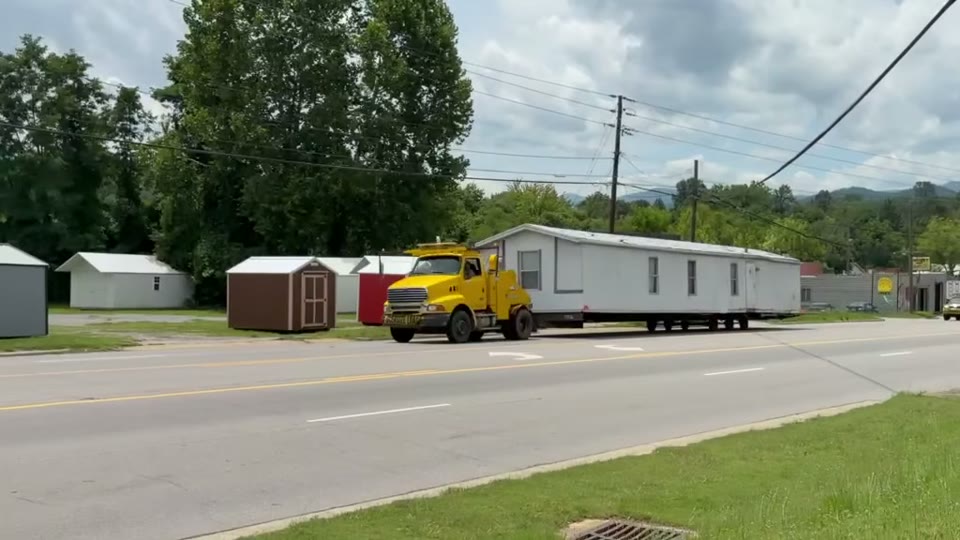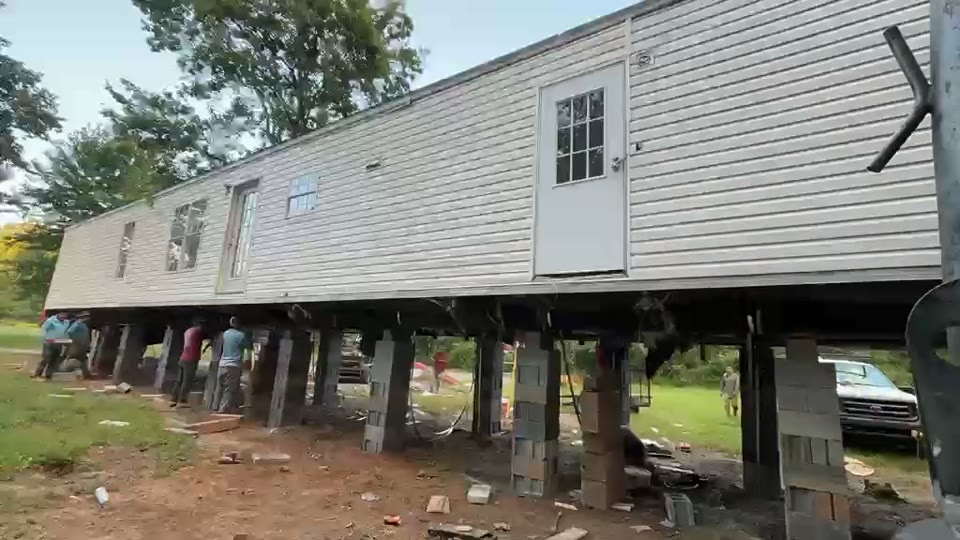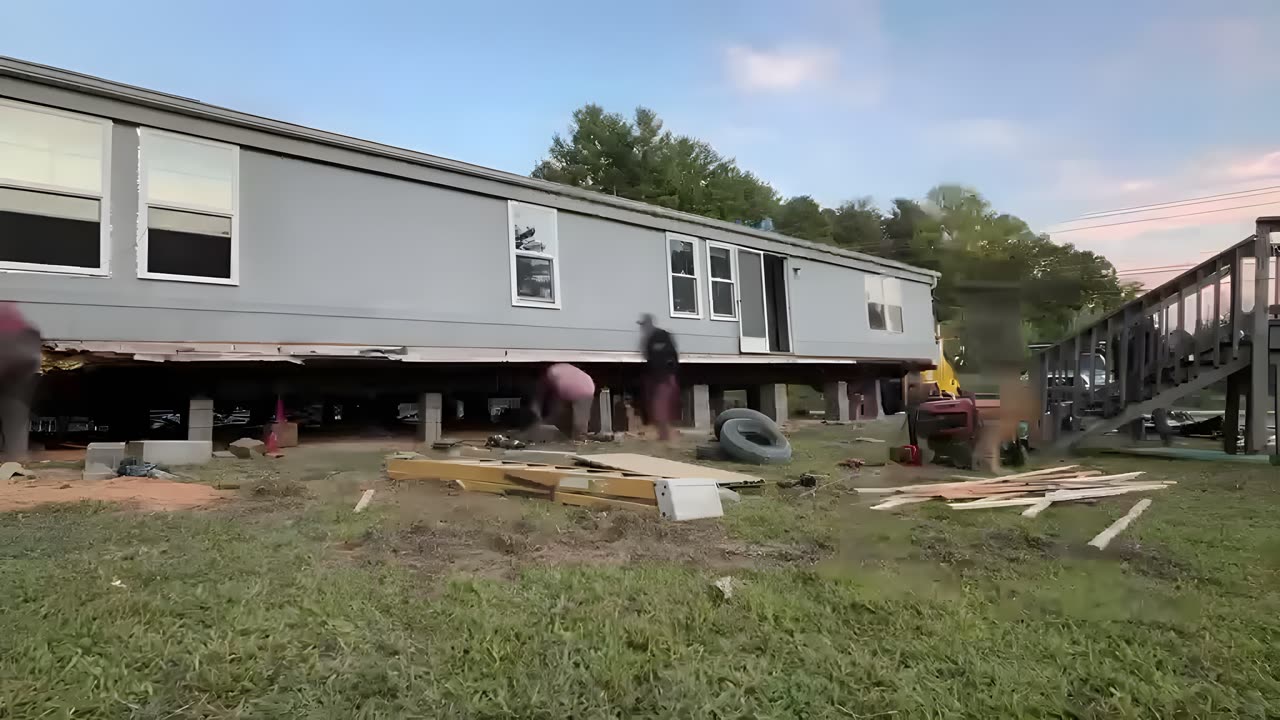
A manufactured home move is a sequence, not a single service
Buncombe County sits at the western edge of the Blue Ridge, where narrow ridge approaches, elevation drops, and split-route hauls add planning layers that flat-state moves rarely require. A manufactured home relocation here does not begin with the truck — it begins with route scouting, utility locates at the origin, and permit applications to NCDOT for the oversize load. The haul itself is the visible part of a longer sequence.
What a full move covers: site disconnect at the origin (power, water, sewer, and skirting removal), NCDOT permit coordination, the haul with required escorts, delivery to the destination site, blocking and leveling, anchoring to current HUD standards, utility reconnections, and optional skirting reinstallation at the new location. A transport-only quote covers the haul and nothing else — a common source of sticker shock when the full project lands substantially above the first number seen. Owners scoping a single-wide move and owners scoping a double-wide move face different permit classes, different haul logistics, and different setup complexity: the scopes are not interchangeable.
Towns throughout Buncombe County — Weaverville, Black Mountain, Swannanoa, Arden, Candler, Woodfin — fall within the typical service footprint for a local move. Longer corridor runs connecting the mountains to the Piedmont, including hauls from Mooresville or the Charlotte metro out to Waynesville and through the Asheville NC corridor, are a normal part of this regional market. Those moves require advance NCDOT permit routing, bridge clearance reviews, and coordination with overhead utility crews on the mountain segments of I-26 and US-74.
Scope, distance, and what moves the price
Typical market pricing for manufactured home transport in Western North Carolina runs by scope and home size. Transport-only pricing — the haul, NCDOT oversize permit, and origin-site disconnect — sets the baseline. A complete relocation adds setup phases that are contracted separately and often represent a significant share of total project cost.
| Move scope | Single-wide | Double-wide |
|---|---|---|
| Transport only: haul, NCDOT permit, site disconnect | $3,000–$8,000 | $7,000–$15,000 |
| Local Buncombe County move (under 25 miles, accessible site) | $3,000–$5,500 | $7,000–$11,000 |
| Long haul from Piedmont to WNC (over 100 miles) | $5,500–$8,000 | $10,000–$15,000 |
| Setup and installation (separate contract) | See set-up page | See set-up page |
Distance is the most predictable variable; site access is the least. A home sitting on a graded, road-accessible lot prices differently from one on a steep private drive in the Swannanoa Valley or a back-county hollow with a weight-restricted road between it and the highway. Long hauls from the Charlotte metro and Mooresville corridor to the Asheville NC area require compliance with NCDOT Publication MH-2, which governs mobile and modular home transport permits on North Carolina roads — including single-trip versus continuous-use permits, route-approval procedures, and travel-hour restrictions on mountain segments.
Licenses and permits that govern a legal move
A manufactured home relocation in North Carolina involves two separate regulatory tracks — transport and setup — and assuming one contractor's credentials cover both is one of the most common ways a project gets complicated mid-move.
Transport falls under NCDOT's oversize and overweight permit system. Every manufactured home moved on a North Carolina public road requires a route-specific permit issued for that haul. No blanket annual permit substitutes for a move-by-move NCDOT authorization, and mountain routes carry additional conditions around bridge weight ratings, utility line clearances, and time-of-travel windows that can affect scheduling by days.
Setup is a state licensing matter under the NC Office of State Fire Marshal's Manufactured Building Division. Anyone performing setup work on a manufactured home in North Carolina — blocking, leveling, anchoring, utility connections — must hold a state-issued setup contractor license. That is a separate credential from a general contractor license, and it is the document to ask for before setup work begins. The NC OSFM MBD licensing page lists current license classes and requirements.
At the federal level, HUD's manufactured housing installation standards under 24 CFR Parts 3280 and 3285 govern how homes must be sited and anchored. A setup that does not meet those standards can affect insurance coverage and financing eligibility when the home changes hands.
Anchoring requirements and Buncombe County's storm record
Buncombe County falls in HUD Wind Zone I under 24 CFR 3280.305 — the baseline zone classification that sets tie-down specifications, pier spacing, and the anchoring assembly a setup contractor installs. Baseline, however, does not mean low-consequence in a mountain county with this region's weather history.
Buncombe County has recorded 19 federally declared disasters over 1973-2026, including hurricanes in 2020, 2021, and 2023, a tropical storm in 2024, and a winter storm in 2026. Mountain topography funnels and amplifies wind through river valleys and ridge gaps in ways that zone-level classifications do not capture at the individual site scale. A home anchored to the minimum Wind Zone I specification is code-compliant; a home anchored with attention to actual site exposure — ridge position, drainage direction, prevailing storm approach — is better protected against the events this county has already seen repeatedly.
Proper set-up and installation — pier specifications, blocking schedules, and tie-down layouts matched to the site — determines the home's long-term performance on a Buncombe County lot. The transport move is the beginning of that process, not the completion of it.
Soil conditions around the foundation matter here too. After repeated major storm events, saturated hillside soils affect how blocking settles over time, and site drainage should be part of every setup conversation in this county before the blocking schedule is finalized.
Three questions that keep a move quote honest
"What does this price cover — transport, setup, or both?" Transport-only and full-service prices for the same job can differ by thousands of dollars and represent entirely different scopes with different license requirements. A low transport quote followed by a separate setup invoice is not unusual; it is two contract types being priced at different times. Asking for both numbers before comparing bids is the only way to compare equivalent scope. "Who holds the NC OSFM setup contractor license, and what class?" Under NC state rules, setup work on a manufactured home requires a license issued by the Manufactured Building Division — separate from any general contractor credential. Some moving contractors hold both transport and setup credentials; others subcontract the setup to a licensed party. Either arrangement can work, but knowing who is responsible for the completed installation before work starts prevents disputes when problems surface after the truck leaves. "Have you scouted both sites?" Origin-site problems are the most common source of same-day delays and unplanned costs: a utility that is not actually disconnected, an overhead power line that needs utility coordination, a driveway that will not clear the home on exit. A contractor who prices from an address and a description is not working from the same information as one who has driven both the pickup and delivery sites before writing the quote.