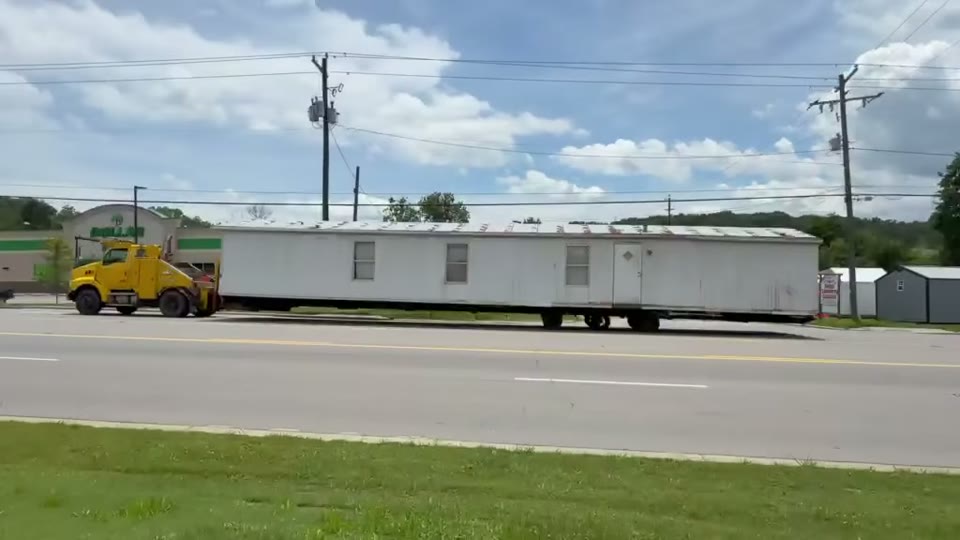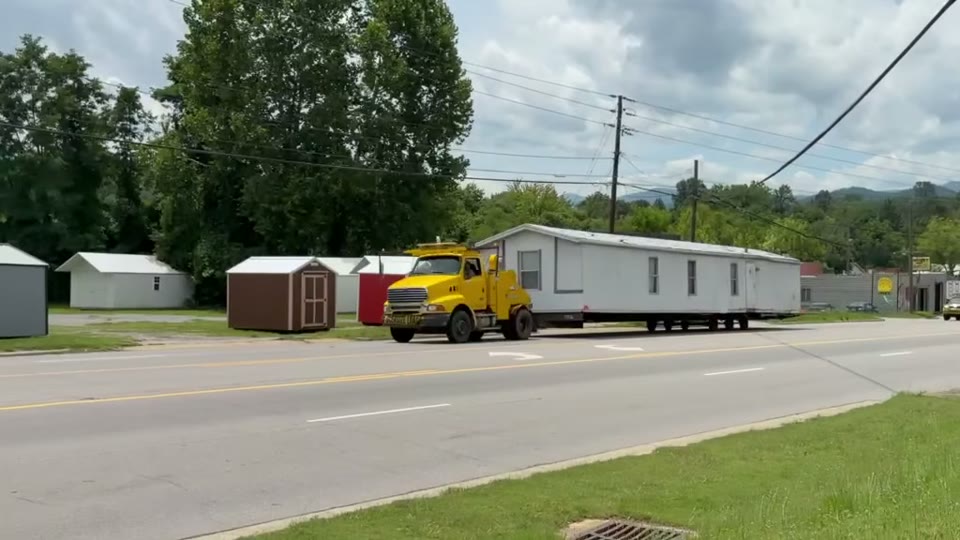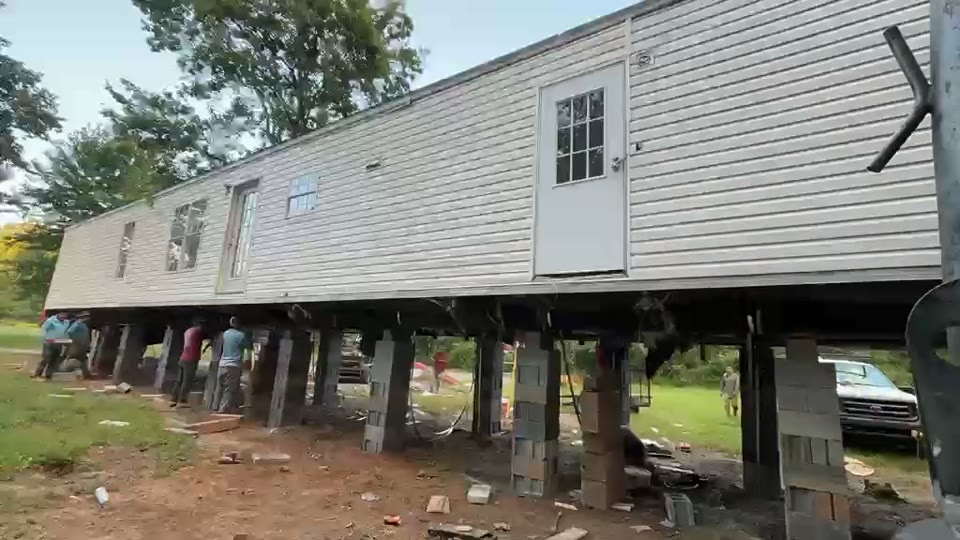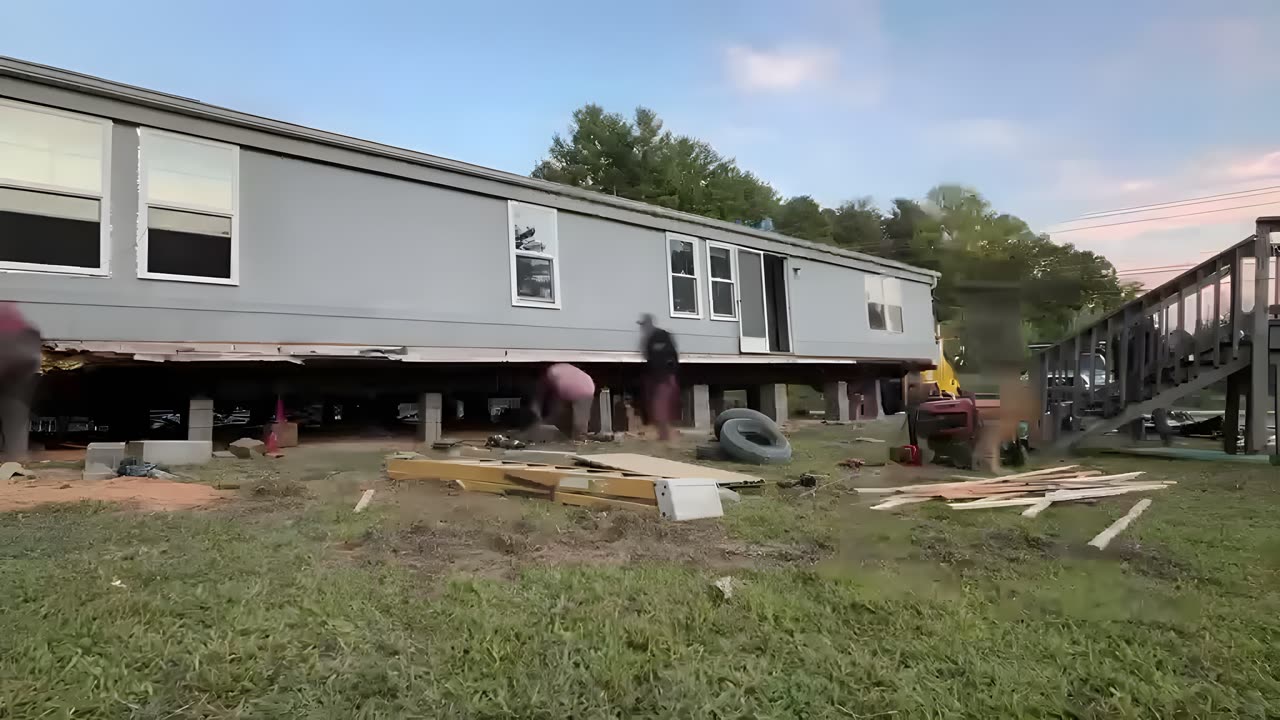
Getting a Weaverville lot ready before the home arrives
Weaverville sits about eight miles north of Asheville NC, where lots range from gently sloped parcels near the valley floor to wooded draws on the hillsides above town that carry runoff fast after a mountain rain. A manufactured home placement starts with the ground, not the structure: the site needs a level, compacted pad with positive drainage away from the home on all four sides, footers set at the right depth, and a surface that will not shift under point loads when wet winters arrive.
Mountain terrain adds steps that flatland jobs skip. Footer depth must reach below the local frost line, and poured concrete on uncompacted disturbed fill will shift even if the depth is correct. The work begins with a site evaluation: identifying the high corner, mapping where water wants to go, and deciding whether the existing grade can be cut to level or requires fill. Fill jobs add both cost and a compaction step that cannot be skipped. Once the pad is shaped, the footer layout follows the home's pier schedule. Full grading and drainage requirements are covered in the grading and footer guide.
Foundation types and what they cost around Weaverville
Three approaches cover most Weaverville installs. The right choice depends on the home's size, the lot's existing grade, and whether the owner plans to enclose the crawl space.
| Scope | Typical range | Notes |
|---|---|---|
| Isolated concrete pads | $2,000–$4,000 | Level lot, standard pier spacing |
| Concrete runners — single-wide | $3,000–$6,000 | Includes grading and compaction |
| Concrete runners — double-wide | $4,000–$8,000 | Wider home, more pier points |
| Full perimeter slab — double-wide | $10,000–$15,000 | Enclosed foundation; engineering often required |
Concrete runners are the most common choice for single-wides and smaller double-wides on reasonably level lots — two continuous poured strips running the home's length, one per side. Isolated pads cost less per pour but require precise placement and careful grading to keep every contact point level. A full perimeter slab is the highest-cost option and is most often used when the owner wants an enclosed finished foundation or the lot is too irregular for runners without significant cut-and-fill. Buncombe County terrain tends to push jobs toward the upper end of these ranges because mountain grading adds hours and sometimes requires engineered fill compaction. The NC footer cost breakdown details these line items statewide.
Permits and utility proof: what Buncombe County requires
The permit application for a manufactured home in unincorporated Buncombe County goes to Buncombe County Permits and Inspections at 35 Woodfin St., Asheville NC. The application requires proof of utilities: a utility letter or active meter receipt for public water and sewer, or a county well authorization and a county environmental health septic authorization for properties on private systems. Homes inside Asheville NC city limits or Black Mountain town limits go through those municipalities' own permitting offices, not the county's.
Before the home is transported to the site, a NCDOT oversize permit is required under Publication MH-2. If the home is being moved from a location where it was taxed as real property, a tax-paid moving permit under NCGS Chapter 105, Article 18 must be secured before the move begins. The installation and setup must meet the standards administered by the NC Manufactured Housing Board, which licenses the contractors who perform this work in North Carolina.
Wind zone, anchors, and the federal setup standard
Buncombe County falls in HUD Wind Zone I under 24 CFR 3280.305, as verified by the HUD Office of Manufactured Housing Programs. That classification sets the minimum wind load the home's structure and anchoring system must be designed to handle. It is the federally verified standard for this county, and every home placed here must be anchored to match it.
Anchor spacing and strap configuration follow from the zone classification. An installer licensed by the NC Manufactured Housing Board knows the required layout; an unlicensed setup that skips the anchor schedule is a code violation and a liability the homeowner carries alone. The full setup picture — blocking, leveling, utility connections, and the final inspection — is covered at the Weaverville installation page.
Storm history, clay soils, and drainage that lasts
Buncombe County has 19 federally declared disaster events over the 1973-2026 record, including Hurricanes in 2020, 2021, and 2023, a Tropical Storm in 2024, and a Winter Storm in 2026. The pattern is consistent: water is the primary force working against manufactured home foundations in this county. A site that drains poorly will cost more to repair than it cost to build.
For Weaverville lots near the valley floor and on the hillsides above town, heavy rain collects quickly on slopes and in low-lying areas. A site that looks dry in summer may run wet from October through April. The National Weather Service publishes flood watch and storm data for Buncombe County; reviewing that record for your specific address is worthwhile before finalizing pad placement and drainage design.
Positive drainage — grading that carries surface water away from the home on all four sides — is the first line of defense. Where grade alone is not enough, a perimeter drain or French drain below the pad elevation is a legitimate budget line item, not an upsell. The grading and footer guide includes a drainage checklist written for mountain lot conditions.
Three questions that reveal whether a crew is ready for this terrain
Ask whether the crew has worked on lots with similar slope and soil conditions in Buncombe County — clay fill compacts differently than native rock, and a crew experienced only on flat sites will underestimate the grading hours. Ask for the installer's license from the NC Manufactured Housing Board before any work begins; that license is what makes the final inspection schedulable. Ask how they handle drainage — whether they grade by instrument or by eye, and what they do when the lot doesn't cooperate.
The answer to the drainage question is the most revealing. A contractor who treats grading as a formality and moves directly to the pour has not done this job in mountain terrain. The right crew spends real time on the site evaluation and explains what the grade wants to do before quoting what the foundation will cost. When you're comparing approaches, the NC footer cost breakdown is a useful reference before the first call.