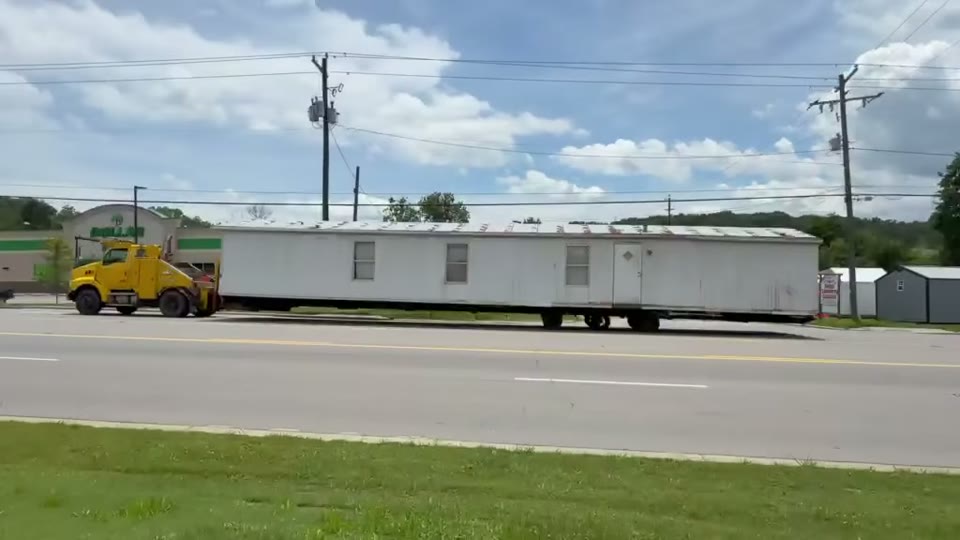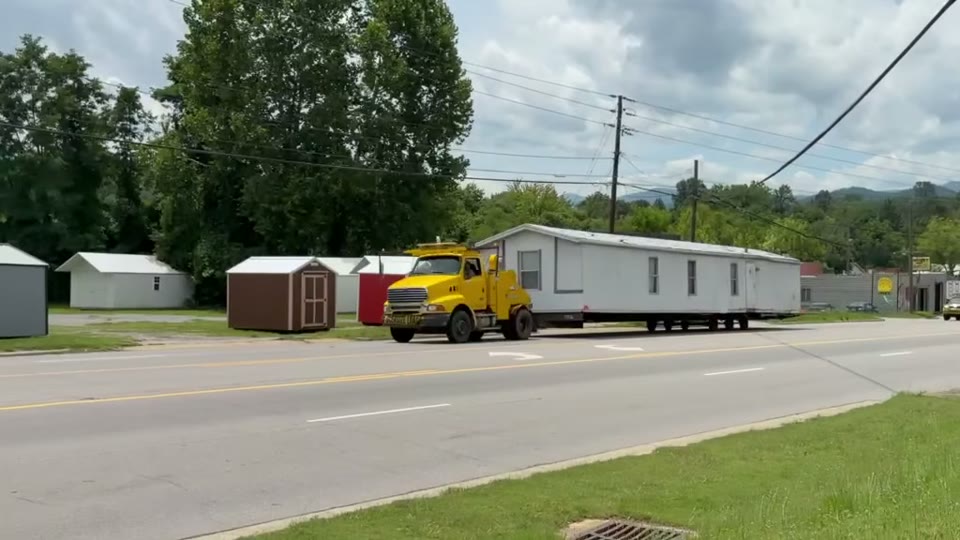
The US-64 corridor from Transylvania County into Etowah
Mobile home transport in this part of western North Carolina does not follow a straight line. A move from the Brevard side of Transylvania County to an Etowah lot in Henderson County runs the length of US-64 through one of the more weather-variable corridors in the region. What departs as a clear morning in Brevard can arrive through steady rain and thunder — the elevation change between Transylvania and Henderson County is enough to cross weather systems inside a single haul, and experienced crews time their lifts accordingly.
Etowah sits in the western reach of Henderson County, far enough from I-26 that every wide load has to plan its approach through surface roads. The terrain is manageable compared to moves deeper into the mountains, but it still asks questions: road width at turns off US-64, utility lines along the route, and whether the destination lot has the clearance to land a double-wide without repositioning. Those answers come before the truck rolls, not after.
For moves that begin outside Henderson County or connect into the broader mountain corridor, the mobile home moving in western NC guide covers the county-by-county permit differences and route logistics that cross-county hauls require.
What a Henderson County move typically costs
Transport prices in this corridor reflect distance, home size, and what the new lot demands on arrival. A local single-wide move within Henderson County sits near the lower end of the typical range. A haul from Transylvania County adds route miles and often a second permit stack. Setup is a separate line item, and so is any lot clearing or block work at the destination.
| Move scope | Typical price range | Notes |
|---|---|---|
| Single-wide, local Henderson County haul | $3,000 – $5,500 | Transport only; short route, standard road access |
| Single-wide, Transylvania or adjacent county haul | $5,000 – $8,000 | Longer route, possible multi-county permits |
| Double-wide, local Henderson County haul | $7,000 – $11,000 | Two sections; weather window and utility coordination |
| Double-wide, cross-county haul | $10,000 – $15,000 | Multi-county permits, extended route planning |
| Full setup and installation (add-on) | $2,500 – $6,000 | Blocking, leveling, utilities — see setup guide |
| Re-leveling only (already-sited home) | $500 – $1,800 | Home already at site — see re-leveling detail |
None of those numbers include land clearing, septic hookup, or utility line extensions — those are contractor scopes outside the move itself. A quote that bundles them without separating the line items is one worth reading carefully before you sign.
Permits before the truck leaves the old lot
Two permit chains run on every move in North Carolina. The transport permit from NCDOT comes first — Publication MH-2 governs how mobile and modular homes travel on state roads, including the oversize and overweight thresholds that apply to wide loads on US-64. It specifies which moves require a permit, what route restrictions apply, and how pilot car requirements are determined. That permit must be in hand before wheels move.
The second chain covers the people doing the work. In North Carolina, contractors moving and installing manufactured housing operate under the oversight of the NC Manufactured Housing Board, which sets the licensing requirements for this trade statewide. If you are hiring someone to move and re-set a home — not just haul it to an empty pad — the installer credential matters. Ask for it before signing anything.
Henderson County adds its own layer: a building permit at the destination site for any new installation, and a disconnect permit at the origin if the home is leaving a titled lot. Permit timelines in the rural parts of Henderson County can stretch longer than in Hendersonville proper, and a move without the destination permit in place can leave a home on a truck with nowhere legal to set down. Build that window into the schedule before you commit to a moving date.
Anchoring and setup at the Henderson County site
Henderson County falls under HUD Wind Zone I as defined in 24 CFR 3280.305 — the standard residential wind zone that applies across the western North Carolina foothills. That designation sets the minimum anchor and tie-down specification for any manufactured home installed in the county. The HUD Office of Manufactured Housing Programs publishes the underlying standards, and the installer's obligation is to meet them at the new site, not just match what the home carried at the old one.
The storm record in Henderson County makes the anchoring question concrete. Federal disaster declarations here cover 16 events over 1978-2026, including hurricanes in 2019, 2020, and 2023, a tropical storm in 2024, and a winter storm in 2026. The National Weather Service mobile home safety guidance is direct on this point: a home that is not properly anchored at its permanent site is the single largest risk factor in severe weather. Blocking, leveling, and tie-down installation are not optional line items on a Henderson County job.
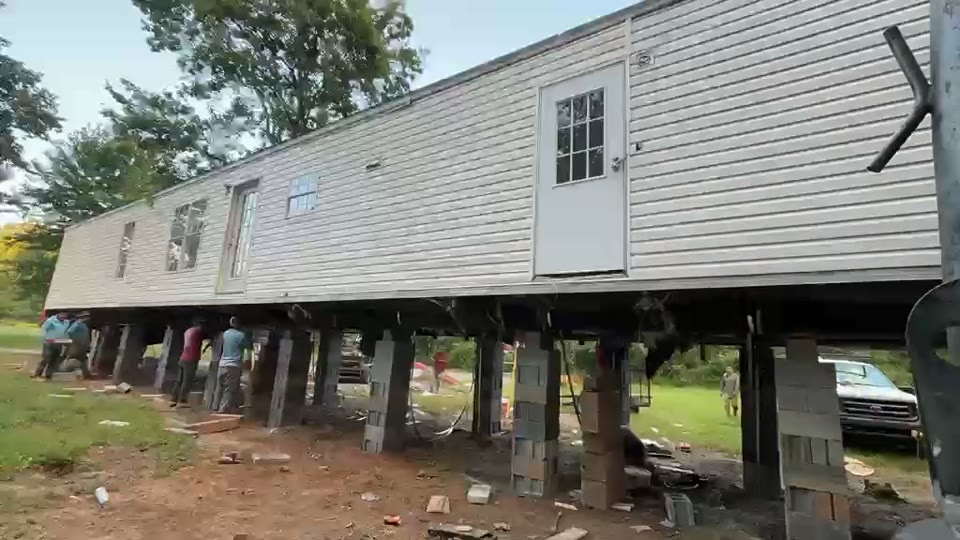
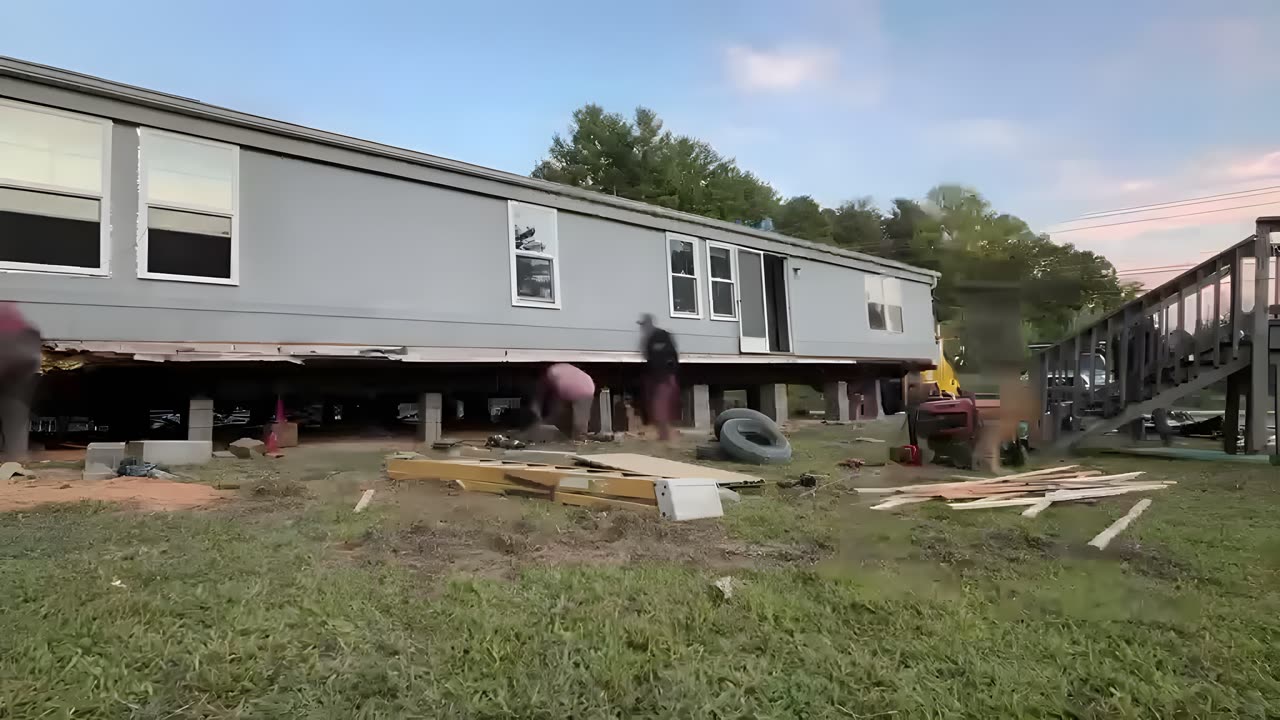
What full setup covers: foundation blocking to a level grade, over-the-top or frame-mounted anchors installed to Zone I specification, utility stub-in connections, and a final level check. The setup and installation guide has the complete scope for a new installation. If the home is already sited and the question is whether existing anchors still meet current requirements, that is a re-leveling and inspection job, not a full move.
What separates a smooth move from a costly one
Most of the things that go wrong on mobile home moves in Henderson County are findable before the truck arrives. The lot condition at the destination is the first question — a pad that is not level, not accessible for the truck width, or not cleared along the approach adds cost and time on arrival, not in the estimate. Ask your mover to look at the destination site before quoting, not after.
Permit timing is the second question. A mover who cannot tell you how long the permit process takes in Henderson County is one who has not done many moves here. Depending on what the county requires at the destination site, permits can move in days or stretch several weeks. Building that window into the schedule before committing to a moving date avoids the most common frustration in this trade.
Third: ask about experience with your specific home type. Older single-wides from the 1970s and 1980s flex differently during transport than more recent builds, and double-wide marriage-wall connections require care during separation and re-mating at the new site. A crew that works mostly newer homes may not be calibrated to an older frame — that question is worth a direct answer before you hire.