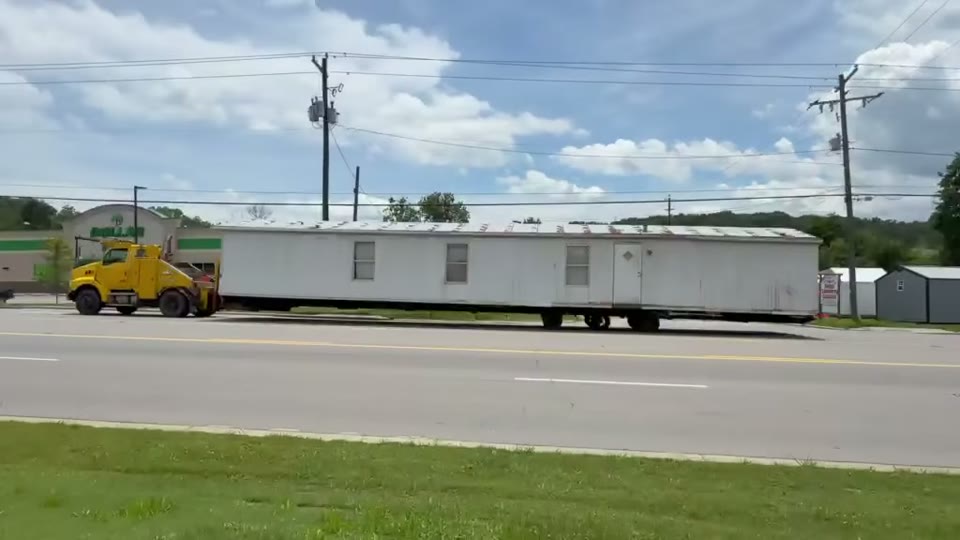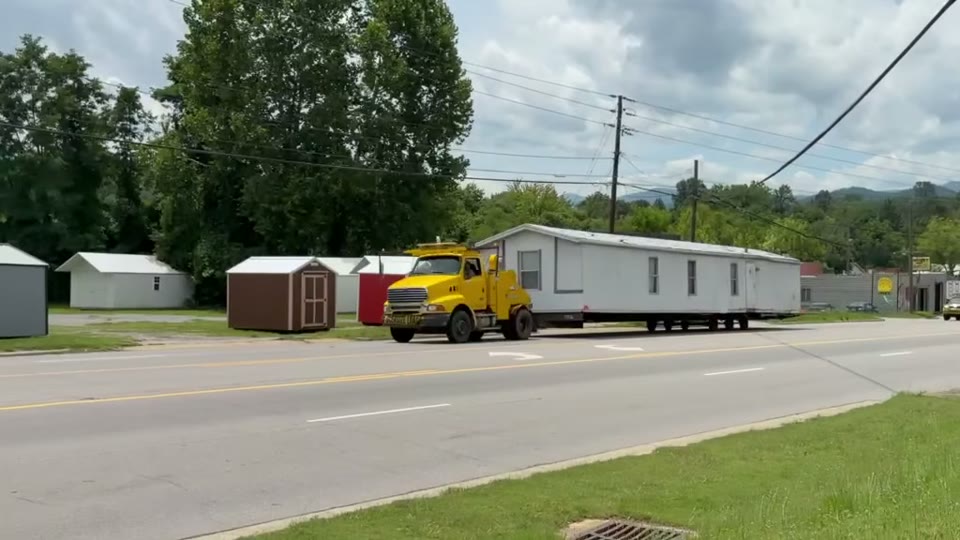
After the haul: what installation covers in Haywood County
Waynesville is the county seat of Haywood County, and the lots here come with the terrain: slope is the rule, not the exception. A delivery truck backs your home in; what happens next is a separate trade — pier and pad work, blocking, leveling to a plumb line, anchoring against wind load, utility hook-ups, and skirting. That is the mobile home installation job, and it is what this page covers.
A standard single-wide set typically runs $1,500 to $3,000 in the Waynesville area; a double-wide set runs $3,000 to $6,000. Those ranges cover the core installation — piers, blocking, leveling, and tie-down anchoring. Utility connections and skirting are usually priced separately and can add considerably depending on run length and material choice. Steep lots, difficult truck access, and long utility runs all push jobs toward the top of those ranges.
For full line-by-line cost context, the NC mobile home installation cost guide breaks down what each scope item typically runs across the state.
Scope breakdown: from piers to skirting on a mountain lot
The installation scope has distinct parts, and each one contributes to the final number.
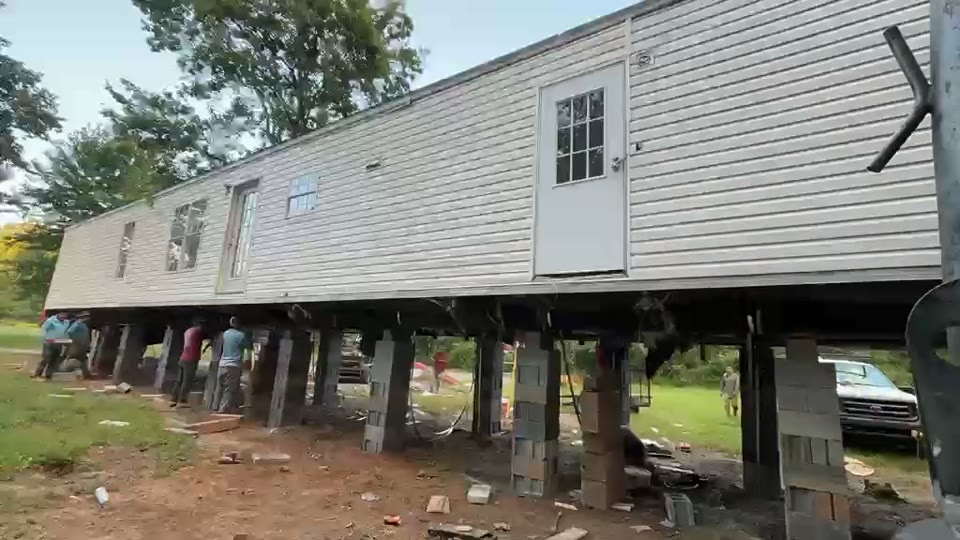
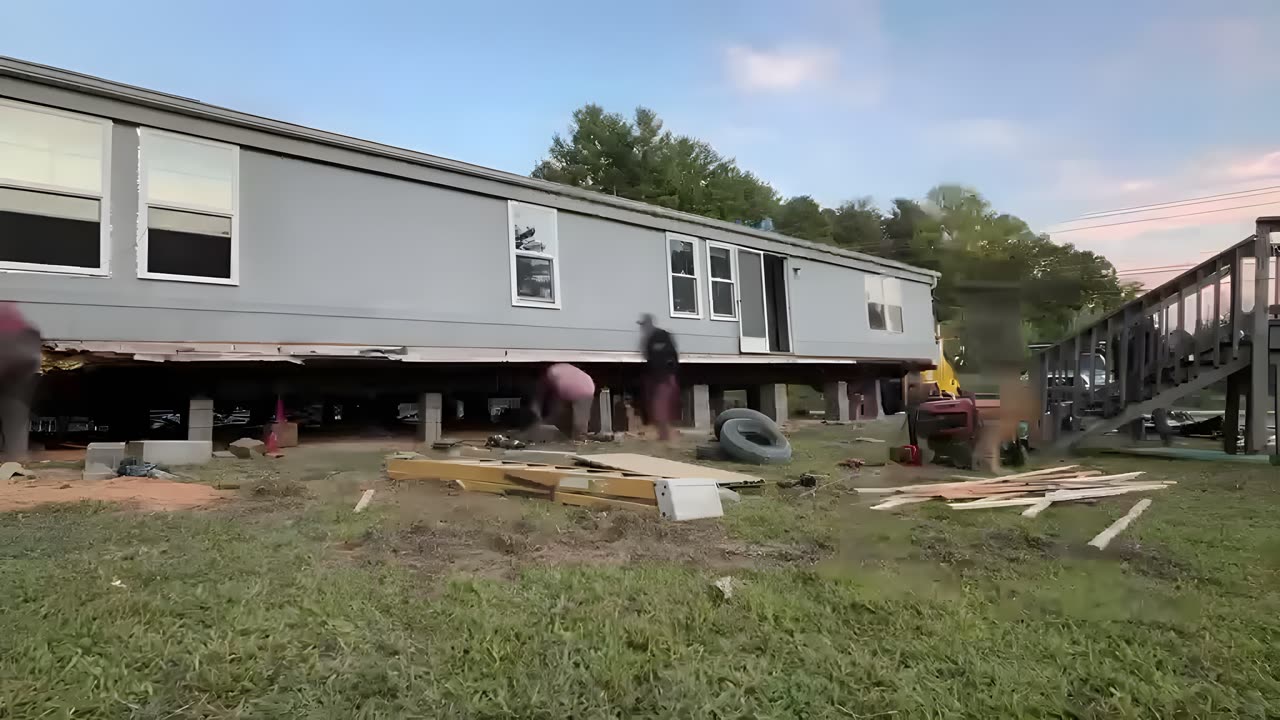
Piers and pads: The foundation under a manufactured home in Haywood County is typically concrete block piers or poured-concrete pads. On sloped ground, the downhill piers end up considerably taller than the uphill ones; more pier height means more material and more labor. Pier spacing and load requirements come from the manufacturer's setup manual and the HUD manufactured housing standards.
Blocking and leveling: Once piers are in, the home is set and shimmed to level. On a Haywood County mountain lot, the differential between the uphill and downhill corners can run several feet. Getting the floor level matters for doors, windows, and the long-term structure of the home.
Utility connections: Electric, water, and sewer hook-ups are typically not included in the set price. Those connections depend on the existing service points on your lot and how far the home sits from the service stub.
Skirting: Skirting closes the gap between the home and the ground and aids under-home ventilation. Vinyl is the most common choice on Haywood County lots; hardboard and masonry block also appear. Price depends on perimeter length and material.
| Scope Item | Typical Range | What Moves the Price |
|---|---|---|
| Single-wide set (piers, blocking, leveling, anchoring) | $1,500–$3,000 | Lot slope, soil conditions, pier count |
| Double-wide set (same scope) | $3,000–$6,000 | Unit length, lot conditions, tie-down count |
| Utility hook-ups (electric, water, sewer) — separate from set | $300–$1,200 | Run length, service point location |
| Skirting installation — separate from set | $700–$2,500 | Perimeter length, material choice |
| Lot grading or site prep (if needed) | Quote required | Amount of cut, drainage needs |
Anchoring for Haywood County's weather record
Haywood County is Wind Zone I under HUD's manufactured housing standard (24 CFR 3280.305). That classification sets the minimum wind resistance a manufactured home must be built and anchored to — it defines the required tie-down pattern: anchor spacing, strap angle, and the load each anchor point must carry.
The zone designation matters in practice here. Haywood County has seen 19 federally declared disasters over 1973-2026, including hurricanes in 2023, 2021, and 2020, a tropical storm in 2024, and a winter storm in 2026. Anchoring to the correct standard — and confirming that ground anchors seat in soil with sufficient bearing capacity — is not a formality on a Haywood County lot.
Ask any setup contractor to confirm they are anchoring to the home's manufacturer setup manual and to the Wind Zone I requirements. A home that is blocked and leveled but improperly anchored is not completely set up. The full process is detailed in the mobile home setup and installation guide.
Permits: what is confirmed, what to verify with the county
Two state-level permits are required before the home moves.
The NCDOT moving permit is required to transport a manufactured home on North Carolina roads. Current requirements — route approval, escort rules, and size limits for oversize loads — are published in NCDOT Publication MH-2.
A tax-paid moving permit is also required under NCGS Chapter 105, Article 18 to confirm property taxes are current before the home changes location. This permit comes from the county tax office.
What is not confirmed here: Haywood County's own permit and inspection process for manufactured home installation. County requirements for footing inspections, electrical, plumbing, and the certificate of occupancy can vary and change. Call Haywood County's building inspections office before move day to confirm what permits the county currently requires for your specific lot. Setup work done without required county permits can create title and financing complications later.
The contractor you hire should hold a current license from the NC Manufactured Housing Board. Ask to see it before pier work begins.
What a setup crew checks on a Waynesville-area lot
Before the home arrives, a setup crew should walk the site. On a Waynesville-area lot, the pre-set review typically covers slope at the centerline and at each corner, soil bearing capacity, utilities locations and distances, and access width for both the delivery truck and the setup equipment. Compacted fill on a cut lot behaves very differently from undisturbed mountain clay, and that difference directly affects the pier schedule.
Lots that have been recently graded carry their own risk. Fill that has not been properly compacted will settle under pier loads; a home set on settling fill will need leveling work months or years later that proper site prep would have prevented. Ask directly whether the contractor has seen your specific lot before they give a firm number — a phone quote on a sloped mountain lot is worth little without eyes on the ground.
The contractor should also review the manufacturer's setup manual for your specific home. That document sets pier spacing, beam loading, and the tie-down pattern. Setup work that departs from it can void warranty coverage and create inspection failures at the county level.