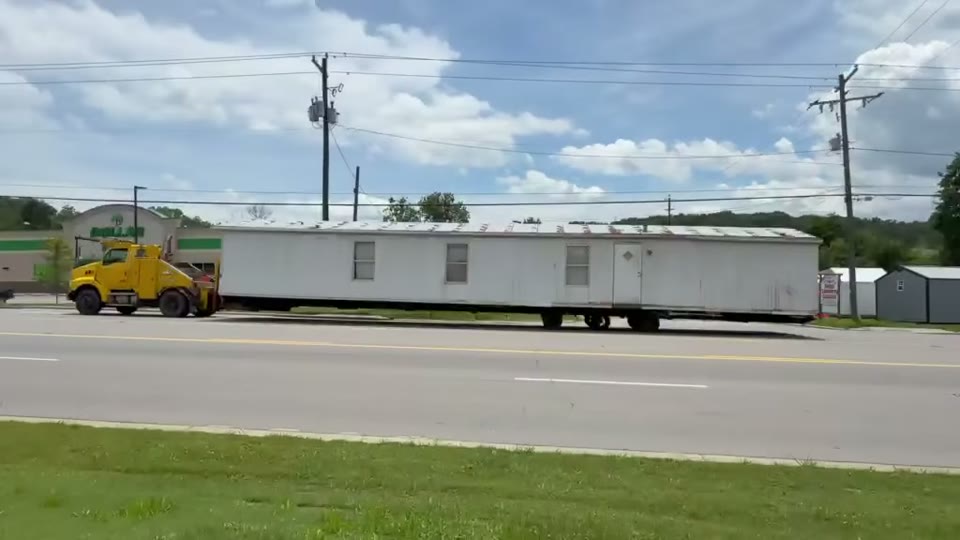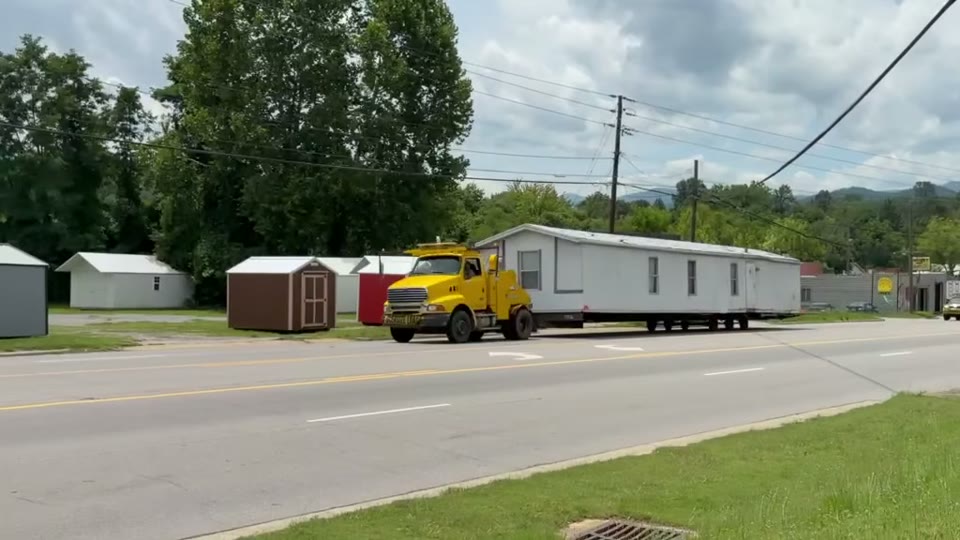
One truck, one move — what the rig actually requires in these mountains
A single-wide on a transport frame is roughly 14 feet wide and up to 80 feet long. In Buncombe County, that geometry meets real mountain terrain: tight exits from older parks near Black Mountain, grade drops heading toward Swannanoa, and access roads on the western edge of Asheville NC that were graded for pickups, not oversize loads. A move from one of those parks to a new lot in Hendersonville — two counties, one continuous haul — is a representative example of what western NC single-wide moves actually require of the crew running it.
Two permits must be in hand before a wheel turns. The NCDOT Publication MH-2 governs oversize transport on state roads: most single-wides qualify as oversize by width alone, triggering escort requirements, route pre-approval, and time-of-day restrictions. The second permit — the one that most often delays jobs — is the NC tax moving permit under NCGS Chapter 105, Article 18, which certifies that property taxes on the home are paid before title can follow the move. That clearance is issued by the county where the home currently sits, not where it is going, and no truck should move without it.
A cross-county haul means a permit application for each county the load crosses. That coordination is the hauler's responsibility, not the homeowner's — but knowing it exists is how you evaluate whether a bid's timeline is realistic.
What the move involves, from disconnect to block-up
Every single-wide move follows the same physical sequence, though site conditions control how long each step takes:
- Utility disconnect. Electric, water, and sewer or septic connections must be properly disconnected and capped before the home moves. Utility companies own that work, not the moving crew.
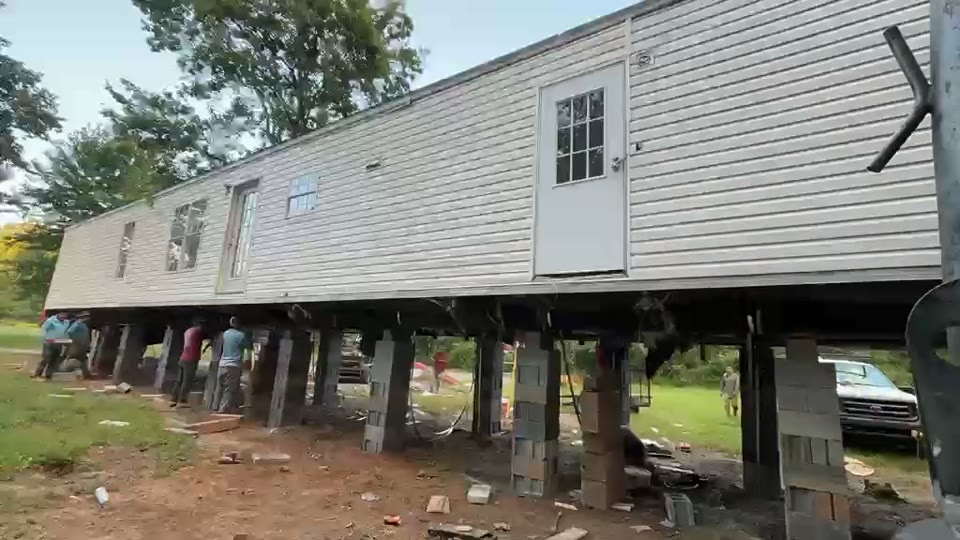
- Skirting and underpinning removal. Crawl-space enclosure comes off. Most of it does not survive the move in reusable condition.
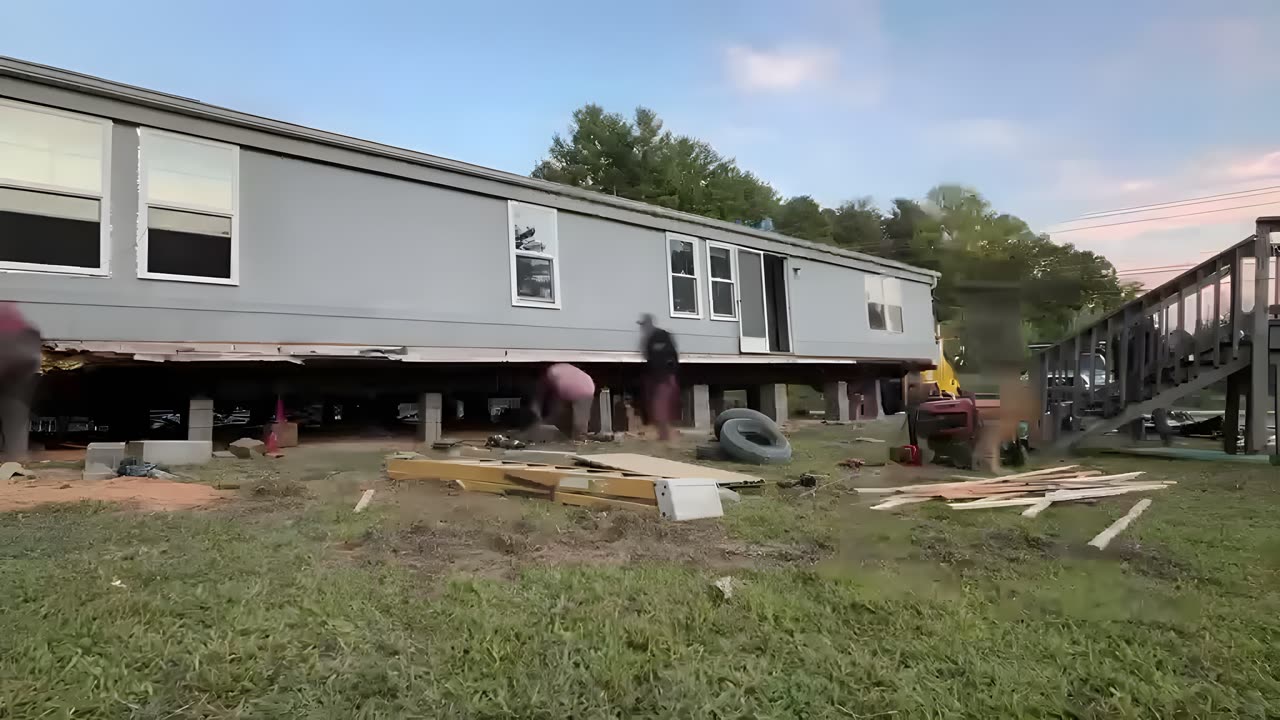
- Blocking removal and axle-up. The home is unblocked from its current setup, the transport frame's axles are positioned and pinned, and the tongue is attached to the tractor. On sloped lots this step requires more staging room than most homeowners expect.
- Haul and placement. The full western NC moving process is covered separately — mountain grades require lower speeds and longer stopping distances than flatland routes.
- Setup and inspection at the new site. Setup and installation is a distinct scope from transport: blocking, anchoring, utility connection, and county inspection. Never assume it is included in the haul price without reading the contract line by line.
What it costs and what moves the number
Transport-only for a single-wide in western North Carolina typically runs $3,000–$8,000. That range reflects real variables: distance, grade, escort requirements, and the complexity of getting the home in and out of its current site. The table below maps common scope combinations to realistic price ranges — not guarantees, but a useful frame for reading a bid.
| Move scope | Typical transport range | Primary cost drivers |
|---|---|---|
| Short local move (same park or adjacent lot, under 5 miles) | $3,000–$4,500 | Minimal route complexity, single-county permit |
| Mid-range county move (5–30 miles, moderate grade) | $4,000–$6,000 | Oversize permit, possible escort, staging time |
| Cross-county haul (Buncombe to Henderson or similar) or steep access | $5,500–$8,000 | Multi-county permits, escort, grade challenges |
Setup, tie-down, skirting, and destination county permit fees are not transport costs — they are a separate line item. A quote that bundles everything without itemizing is difficult to verify; ask for line-item scope so you can compare bids honestly. The setup and installation page breaks out what that additional scope covers and its typical cost range in western NC.
The permit stack — what each document actually does
Three distinct permit categories apply to every relocation, and conflating them is how schedules slip.
Tax moving permit (NCGS Ch. 105, Art. 18). Issued by the county tax office where the home currently sits. Proves taxes are paid or that a payment arrangement is in place. The DMV cannot process title transfer at the new location without it.
NCDOT oversize transport permit. Route-specific — if the route changes, the permit changes. Publication MH-2 details the application process, escort requirements, and which roads require special approval.
Destination county building permit. Required before a relocated home can be legally occupied. The Henderson County permit process for manufactured homes illustrates what that review covers — setbacks, foundation type, utility connections, and anchoring. Buncombe County follows the same statewide framework under the NC Building Code Council's manufactured housing standards. The HUD Office of Manufactured Housing Programs sets the federal construction standards documented on the home's data plate; older homes may require additional work to meet current site-installation requirements.
After the truck leaves — anchoring, leveling, and the inspection that clears occupancy
Transport ends when the home is placed and blocked on the new lot. Legal occupancy does not begin until setup is complete and the county inspector has signed off.
Buncombe County falls in HUD Wind Zone I under 24 CFR 3280.305. The installation standard specifies anchor type, spacing, and soil conditions required at that classification — an installation that skips anchoring does not pass inspection and will not qualify for coverage under most manufactured home insurance policies.
Mountain lots in this region are frequently sloped, and how carefully the initial blocking is done determines how long the home stays level. A home blocked quickly on uneven ground will need re-leveling sooner than one set correctly from the start — and re-leveling is an additional cost that good setup prevents. A new site that requires grading or a different foundation type than the home's original install adds time before setup can begin, and blocking on fill that has not settled compounds the long-term leveling risk. Drainage around the new site matters too: water pooling against the pier system accelerates settlement and undermines anchor hardware over time.
Mountain weather and why timing matters for any western NC haul
Buncombe County has recorded 19 federally declared disasters over 1973-2026. The most recent sequence — a Winter Storm in 2026, a Tropical Storm in 2024, and hurricanes in 2023, 2021, and 2020 — reflects what late-season weather does to mountain access roads and creek crossings: saturated soil, road damage, and flooding that can delay or cancel a scheduled haul by days.
Spring and early fall are the most reliable moving windows in western NC. A home that is unblocked and on axles overnight is more exposed to weather than one that is fully set up and anchored, which is one practical reason to schedule the haul and the placement as back-to-back days rather than spreading a move across a week. Whatever the season, monitor the NOAA National Weather Service Asheville NC forecast through the full week before any scheduled transport — mountain systems move faster than coastal ones, and conditions in the French Broad watershed can shift overnight.