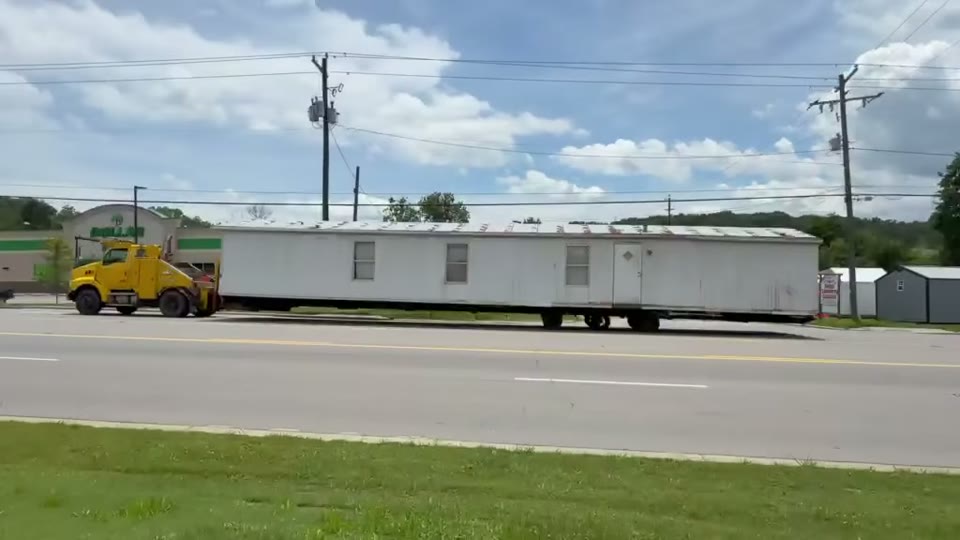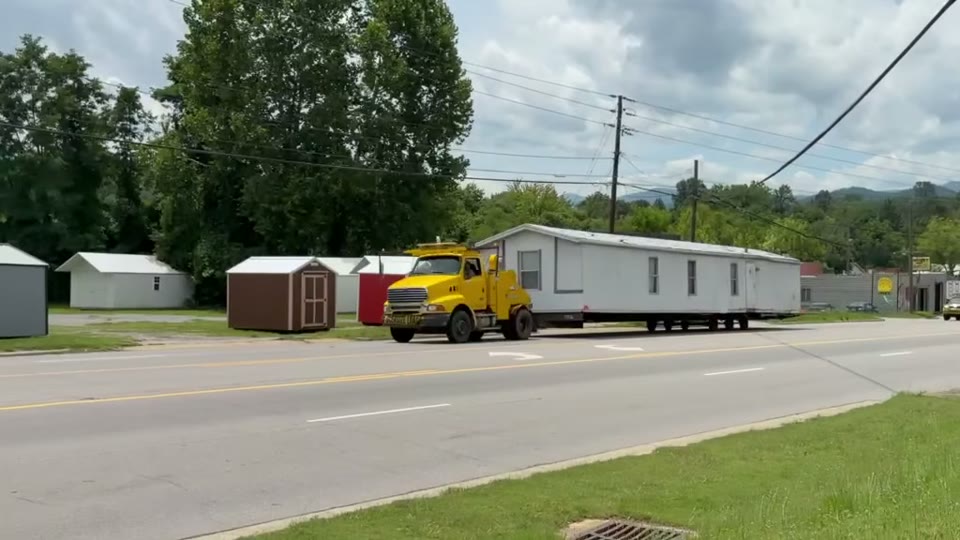
A real Cherokee move: from the Qualla Boundary to East Henderson
Cherokee, the principal town in Swain County, sits at the entrance of the Qualla Boundary and draws manufactured housing traffic in both directions: homes arriving as families settle near tribal employment, and homes departing as owners relocate elsewhere in western North Carolina. The most common long-haul runs northeast down US-74 through Sylva and Waynesville, then north on I-26 into Henderson County toward Flat Rock and East Flat Rock. It is a well-mapped corridor for oversize loads, but the sustained mountain grades between Swain and Henderson counties require a pilot vehicle and careful timing on roads that carry heavy tourist traffic through much of the year.
Not every Cherokee move goes that far. A transfer within Swain County (from one parcel near Bryson City to a lot off a cove road) covers fewer miles but can still hit a hard stop: a tight turn off US-19 or a low bridge on a county road stops a 14-foot-wide home as surely as a missing permit. The first question any experienced crew answers before quoting is whether the route is physically clearable, not how many miles the map shows. For the full picture of what mountain moving involves across this region, see our overview of mobile home moving in western NC.
What a Swain County move actually costs
Around Cherokee a single-wide transport typically runs $3,000 to $8,000 and a double-wide $7,000 to $15,000. Those are transport-only figures: the truck, rigging, and required NCDOT oversize permit. Everything at the destination (site prep, blocking, anchoring, and utility hookups) is quoted separately and added to the transport number.
| Scope | Typical range | Notes |
|---|---|---|
| Single-wide transport | $3,000 – $8,000 | Transport only; distance and road access are the main cost drivers |
| Double-wide transport | $7,000 – $15,000 | Transport only; mountain grades and wide-load handling add cost |
| NCDOT oversize permit | Required; varies by route | Mover handles the state permit; destination county adds its own |
| Blocking and leveling at destination | Quoted separately | Lot conditions and pad prep determine this figure |
| Anchor and tie-down installation | Quoted separately | HUD Wind Zone I minimums apply throughout Swain County |
| Utility disconnect and reconnect | Quoted separately | Licensed trades handle electric, water, and gas individually |
The Cherokee-to-Flat Rock haul is roughly 80 miles with sustained elevation change. A single-wide on that run typically lands in the middle of the transport range. A double-wide moving from a tight origin lot (limited truck access, soft ground, or utility lines close overhead) can push toward the high end of its range before a single block is set at the new site.
Permits on both ends, and the Qualla Boundary question
Every oversize load on a North Carolina highway requires a state transport permit before the truck moves. The application process and fee structure are documented in NCDOT Publication MH-2; the mover pulls that permit. The destination county — whether Henderson, Buncombe, or Swain itself — adds a moving permit, and an installation permit follows once the home is on the pad and site work begins. Budget time for that sequence: permits at the destination sometimes take longer than the move itself.
If the home sits on the Qualla Boundary, the permit picture is more involved. The Eastern Band of Cherokee Indians holds jurisdiction over land development on the Qualla Boundary separate from and in addition to Swain County. There is no workaround: any move that originates on Qualla Boundary land or delivers to it needs clearance from the tribe before a date is scheduled. Contact the EBCI directly for current requirements. Relying on the mover or the county to resolve tribal permitting is a common source of delay on these jobs.
The NC Manufactured Housing Board, housed under the Office of State Fire Marshal, licenses the contractors authorized to set up and install manufactured homes in North Carolina. Before any crew does blocking, leveling, or tie-down work at the destination, ask for the board license and verify it is current.
Site work after the home arrives
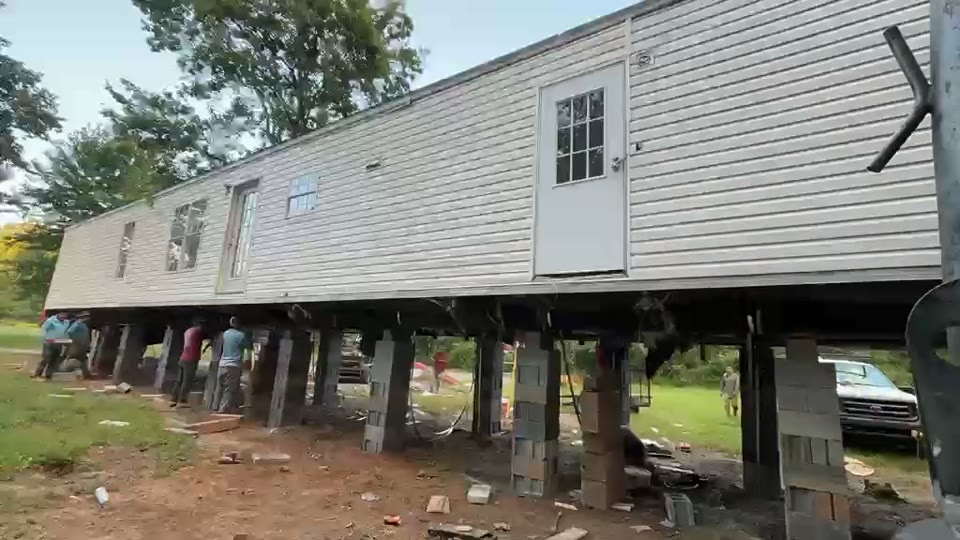
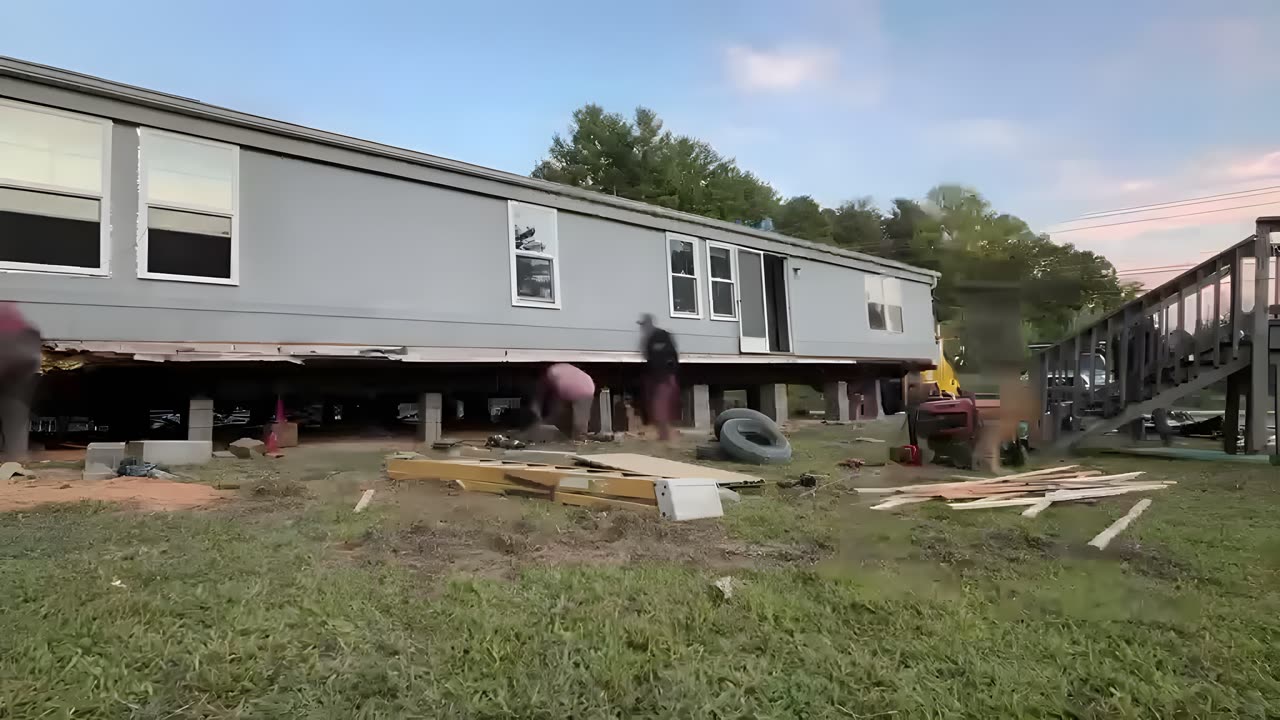
Transport ends when the home reaches the lot. Setup begins from scratch: the pad needs to be graded and stable before the home is dropped, utilities need rough-in ahead of arrival, and the anchor system installs before occupancy. Swain County falls in HUD Wind Zone I under 24 CFR 3280.305, the federal standard that sets minimum anchor and tie-down requirements for manufactured housing in this region. A crew that knows the zone spec installs to that standard from the first day, which matters when the installation inspector arrives.
The HUD Office of Manufactured Housing Programs publishes and maintains the federal installation standards that apply to any manufactured home regardless of which state or county it sits in. For the full scope of what a complete setup job covers (blocking, leveling, skirting, and each utility connection), see our mobile home set-up and installation page. If a home settles over a season at the new site and develops a lean, mobile home re-leveling corrects that without moving the home a second time.
Storm history and what it means for anchoring here
Swain County has accumulated 15 federal disaster declarations spanning 1993-2026, a record that includes Hurricanes in 2020 and 2022, a Tropical Storm in 2024, a Fire event in 2025, and a Winter Storm in 2026. The wind and precipitation events in that record are precisely what the anchor standards in 24 CFR 3280.305 were written to address. A manufactured home in this terrain that is properly tied down to Zone I spec handles conditions that an unanchored or under-anchored home does not.
The National Weather Service is explicit on manufactured housing and severe weather: residents should identify a nearby permanent structure in advance, because no anchor system substitutes for a solid shelter during a tornado warning. That guidance applies to any manufactured home in western North Carolina, regardless of how recently it was set or how well it was anchored. It is a planning step that belongs on the checklist when any home is moved into a new location.