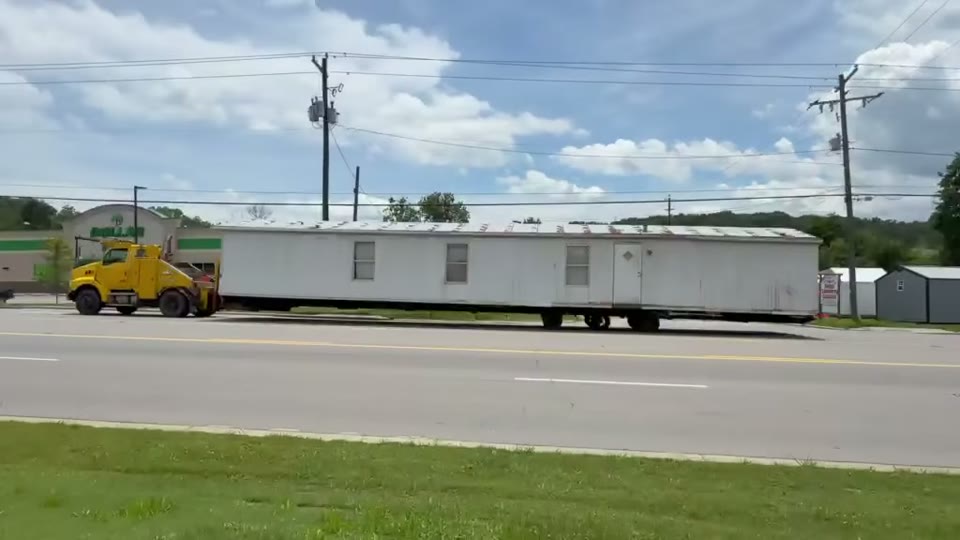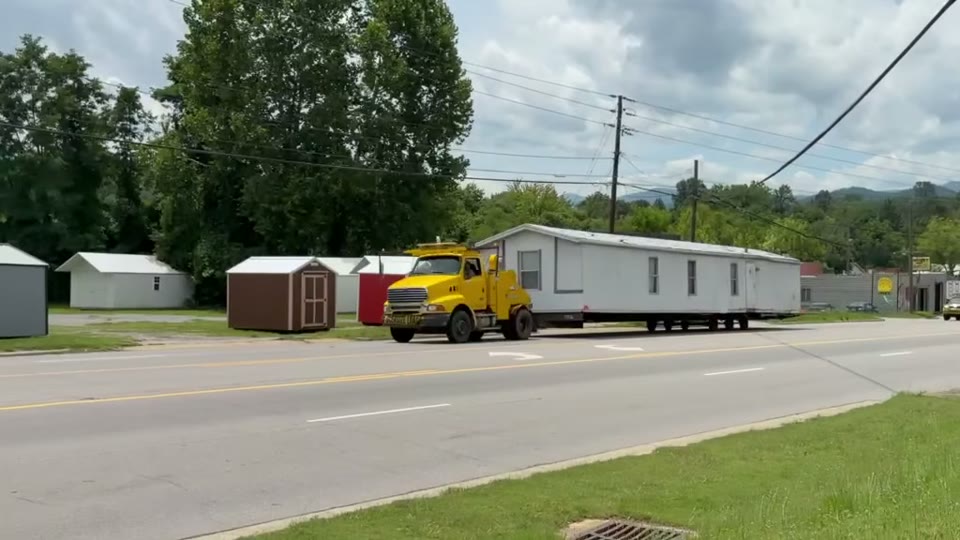
What a single-wide move actually costs in this market
A single-wide on a Buncombe County road is not the same job as one rolling across the Piedmont. The ridge lots above South Asheville NC, the hollow driveways in the Leicester community, and the narrow county roads climbing toward Black Mountain all add planning complexity, permit layers, and equipment time that flatland quotes simply don't carry. The numbers below reflect what that reality costs in this region.
Transport-only moves in Western NC typically run $3,000 to $8,000. Full moves that include setup — blocking, leveling, anchoring, skirting, and utility connections — typically land $5,000 to $12,000. The table shows how scope stacks up against price across the range.
| Scope of work | Typical Western NC range | What drives it |
|---|---|---|
| Transport only, short haul (under 30 mi) | $3,000 – $5,500 | Permit fees, single pilot car, blocking at origin |
| Transport only, regional (30–100 mi) | $5,000 – $8,000 | Distance, multi-county permits, pilot car mileage |
| Transport + basic setup | $6,000 – $9,500 | Blocking, leveling, tie-down inspection |
| Transport + full installation | $8,000 – $12,000 | Engineered anchoring, skirting, utility connections |
These are honest market ranges, not quotes from any single contractor. The number that applies to a specific move depends on distance, access conditions at both origin and destination, the grade of the landing site, and how much setup the new location requires. A mover offering a firm all-in price before seeing either site is pricing from assumptions, not from your job.
How mountain terrain raises the baseline price
Western North Carolina's ridge-and-valley topography adds cost to single-wide transport that national moving guides never account for. The Blue Ridge and Black Mountain ranges push road grades and curve radii beyond what oversize loads navigate at highway speed. Many of the secondary roads serving Buncombe County's rural communities — the grades climbing above Weaverville, the curves dropping into the Swannanoa Valley, the tight switchbacks accessing properties north of the French Broad River — require a route survey before a transport company can commit to a schedule or a price.
Route complexity shows up in the quote several ways. Pilot cars — required under NCDOT Publication MH-2 for loads exceeding specified width thresholds — carry their own hourly rate and mileage charges. A move crossing into adjacent counties adds per-county permit fees that accumulate quickly on regional hauls. Time-of-day restrictions on certain mountain corridors limit when the truck can legally run, which affects crew scheduling and, in turn, rates.
A move at the same mileage on this side of the mountains carries more built-in cost than an equivalent Piedmont haul because the terrain makes it a fundamentally different job. For a full look at routing constraints, timing windows, and what to confirm before the truck is scheduled, the mobile home moving Western NC guide covers the logistics end to end.
What the destination site determines about total cost
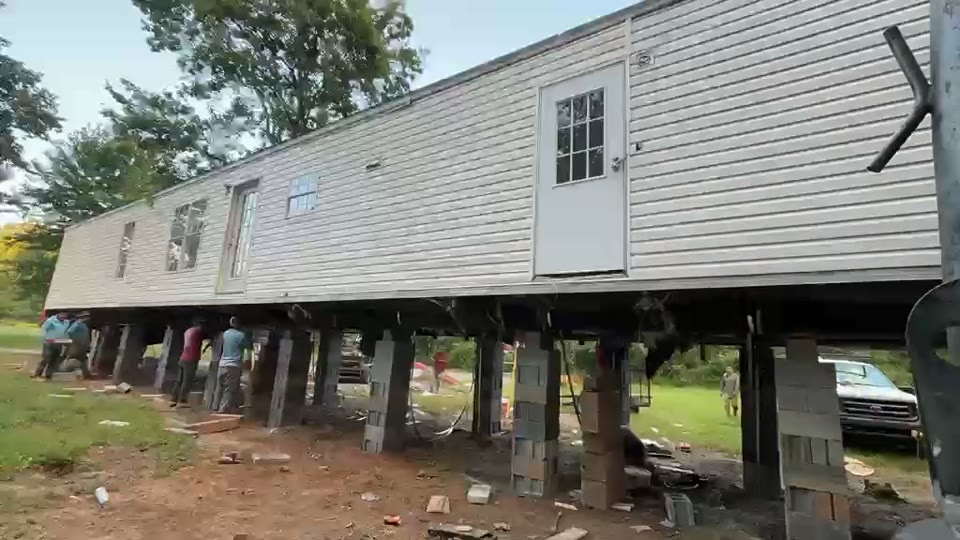
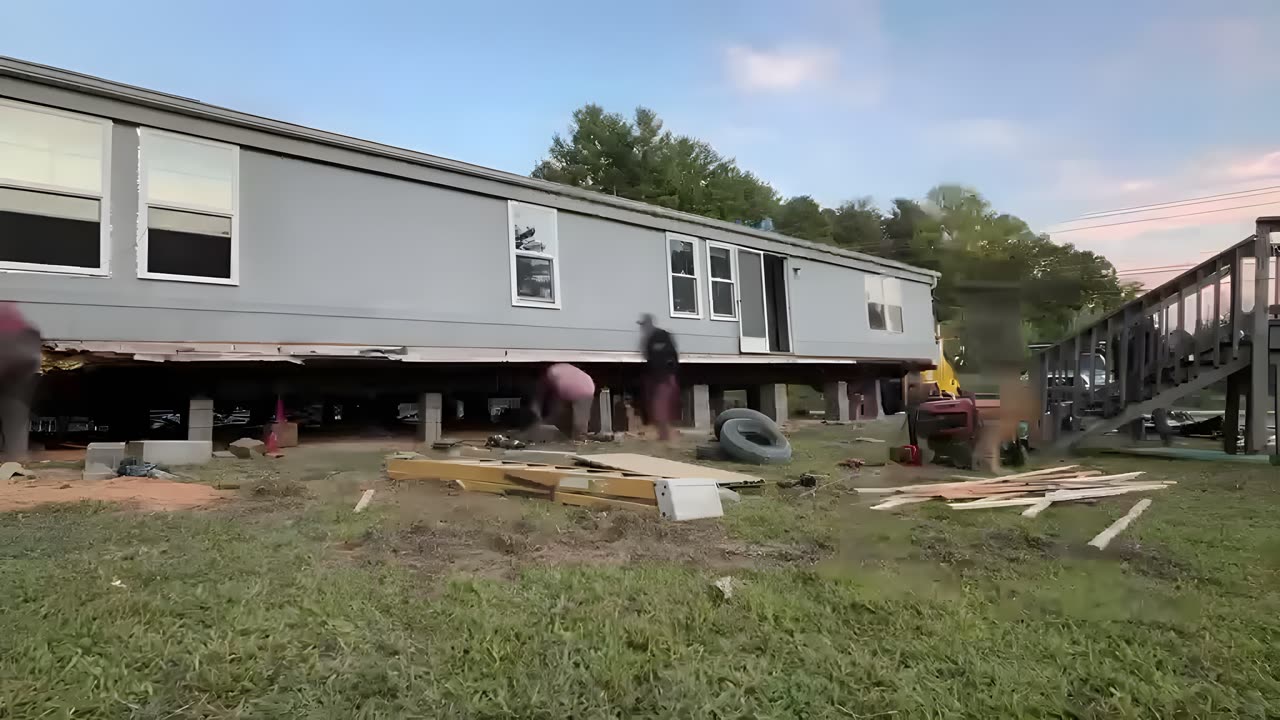
The gap between a $6,000 job and a $12,000 job in this market is almost always setup, not transport. A home going onto a prepared, level pad with existing utility stubs needs blocking, leveling, and a tie-down inspection — that portion typically adds $3,000–$5,000 on top of transport. A home going onto a raw sloped lot anywhere in the Buncombe County backcountry needs a pad graded or poured first, an anchoring system suited to the soil, skirting installed, and utility connections run from scratch. That second scenario is where the top of the range lives.
Anchoring is not discretionary. Buncombe County falls in HUD Wind Zone I under 24 CFR 3280.305, the national standard administered by the HUD Office of Manufactured Housing Programs. Zone I is the baseline wind load classification, and this county's storm record gives that baseline concrete meaning. Buncombe County has experienced 19 federally declared disaster events spanning 1973-2026, a history that includes Hurricane (2020), Hurricane (2021), Hurricane (2023), Tropical Storm (2024), and Winter Storm (2026). Homes set up to the Zone I anchoring standard are built to withstand the weather pattern this county has actually experienced. An installation that skips the required tie-down system creates a liability that setup inspections are specifically designed to catch.
A full installation — blocking, pier footings, anchoring system, skirting, and utility connections — typically adds $3,000–$6,000 on top of transport. The mobile home installation cost NC guide breaks down each line item so you can assess what any setup quote is and is not including before you sign.
Permits and licensing that apply before the home moves
Two legal requirements apply to virtually every single-wide move in North Carolina, and both must be in place before the truck leaves the origin site.
The first is the NCDOT oversize load permit. Publication MH-2 governs how mobile and modular homes travel on state roads — setting the dimensions that trigger permit requirements, the conditions under which pilot cars are required, and the time-of-day restrictions that apply on certain routes. A mover operating without this permit on public roads creates real liability if anything goes wrong in transit.
The second is the tax-paid moving permit under NCGS Chapter 105, Article 18. North Carolina requires this certificate before a manufactured home can legally be transported — it confirms that property taxes on the home are current. Getting it resolved early prevents last-minute delays when permit windows are already limited.
On the contractor side, the NC Manufactured Housing Board, administered by the Office of State Fire Marshal, licenses contractors who transport and install HUD-code manufactured homes in the state. Verifying a current license before signing is a simple step that filters out a meaningful number of avoidable problems. The guide to licensed single-wide movers in NC covers what a valid license looks like and how to confirm standing before you commit.
Questions that protect your budget before the quote becomes a contract
Moving quotes in this market vary more than most people expect because they cover different scopes — and because mountain-route moves carry variable costs that don't always surface in an initial estimate. Three questions clarify the picture before a number becomes binding.
Does the quote include permits and pilot car fees? NCDOT oversize permits and pilot car charges are real, measurable costs. Some movers bundle them into the quoted price; others invoice them separately. Know which before you compare bids.
Has the mover seen both sites? Access conditions at the origin — whether a transport truck can back in cleanly — and at the destination — slope, clearance, existing utility locations — directly affect whether the quoted price holds once the job starts. A site visit, or at minimum a detailed exchange of photos and measurements, is more reliable than anything priced cold over the phone.
What exactly does the quoted setup include? Some contractors quote transport plus basic blocking as a complete job. Others build in tie-down inspection, skirting, and utility connections. Make the scope explicit in writing before comparing numbers. The lowest quote on a Western NC single-wide move often reflects the narrowest scope, not the best value for the full job.