What moving a home from Candler typically costs
Mobile home moves starting in Candler tend to land near the lower end of the regional price range. Smokey Park Highway (US-19/23) cuts through the valley and the I-40 interchange sits close — most destinations in Buncombe County and neighboring Henderson or Haywood County are a clean highway haul from here, and clean highway access is the single biggest factor that keeps transport costs predictable. A single-wide move in this market typically runs $3,000 to $8,000 and a double-wide $7,000 to $15,000, transport only, before permits, setup labor, and utility reconnects. The factors that push any specific job toward the top of those ranges are distance, lot access at either end, and scope.
| Scope | Typical Range (transport only) |
|---|---|
| Single-wide, short haul (under 20 miles) | $3,000 – $5,500 |
| Single-wide, medium haul (20–50 miles) | $4,500 – $8,000 |
| Double-wide, short haul (under 20 miles) | $7,000 – $11,000 |
| Double-wide, medium haul (20–50 miles) | $9,500 – $15,000 |
| Difficult lot access (steep grade or tight turn-in) | Add $500 – $1,500 |
| Addition or covered porch, teardown and rebuild | Add $800 – $2,500 |
These figures cover transport only. A full-service scope that includes disconnect at the origin, blocking, tie-down installation, and utility stubout at the destination adds to that number. The setup and installation page breaks down what each of those line items covers and what to ask a crew before a date is set.
Routes out of Candler and the lots that slow them down
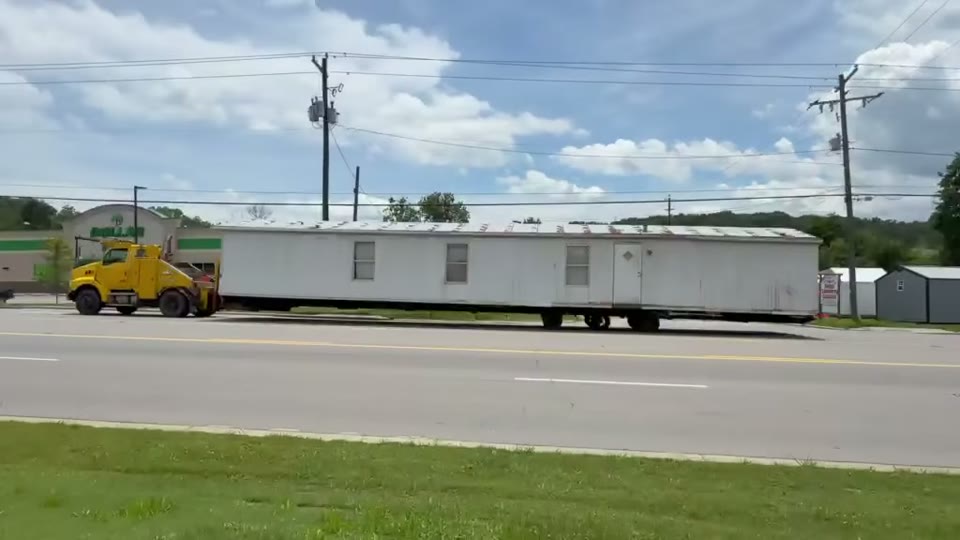
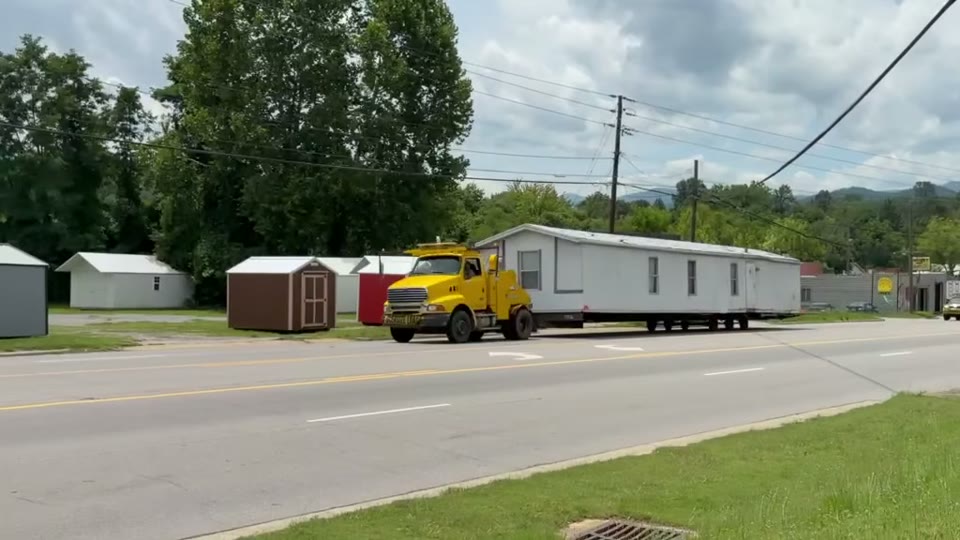
The move from Candler to Hendersonville documented on the crew's Facebook page is a practical point of reference. Henderson County is one county south, the preferred route runs US-19/23 to US-64 without unusual clearance issues, and that job came in on the lower half of the single-wide range. A move with a similar profile — a direct highway corridor and accessible lots at both ends — will price accordingly.
What changes the calculation is not the highway miles; it is the lot at either end. Secondary roads feeding off Hominy Creek Road and the ridge approaches west of Candler gain grade quickly. A driveway that looks accessible on a satellite view can present a different picture when a carrier pilot needs to position an 80-foot combined load at a level drop zone. Tight turns on narrow county roads between the I-40 interchange and the destination add time, and added time adds cost. Any quote that does not include a site check on both ends before the date is confirmed is missing half the information needed to give a firm number. For a broader look at moves across the mountain region, the western NC moving page covers routes, terrain, and what the full scope typically involves.
The permits that move before the home does
Every mobile home moved on North Carolina public roads requires an oversize transport permit through NCDOT before the carrier leaves the origin lot. Publication MH-2 specifies the requirements for mobile and modular home moves: allowable dimensions, routing constraints, escort vehicle requirements, and time restrictions that prohibit travel after dark or during certain weather conditions. A single-wide in transport configuration typically moves under a standard oversize permit. A double-wide travels as two separate sections on individual carriers, and the permit process for a split load involves more coordination and sometimes route-specific approvals. Several bridges on county roads around Candler carry posted weight limits that may require alternate routing even on a short haul.
The destination requires its own paperwork. Installing or relocating a manufactured home in Buncombe County requires an installation permit and a completed inspection before the home can be permanently connected to utilities. The NC Manufactured Housing Board, under the Office of State Fire Marshal, licenses the installers authorized to perform that work and defines what the inspection covers. Starting the destination permit application before the transport date is set avoids the scenario where the home arrives at the site before the county is ready to schedule an inspection — an avoidable delay that can hold up utility connections for weeks.
Blocking, leveling, and what the anchor inspection checks
HUD assigns Buncombe County to Wind Zone I under 24 CFR 3280.305, the baseline national standard that governs how manufactured homes are designed and how they must be anchored at installation. A Zone I installation requires a tie-down system consisting of ground anchors, diagonal straps, and frame connections installed to match the manufacturer's engineered specifications. That system is verified at the required installation inspection, and failing to match anchor count or strap angle to the manufacturer's requirements is the most common reason first inspections do not pass in this county.
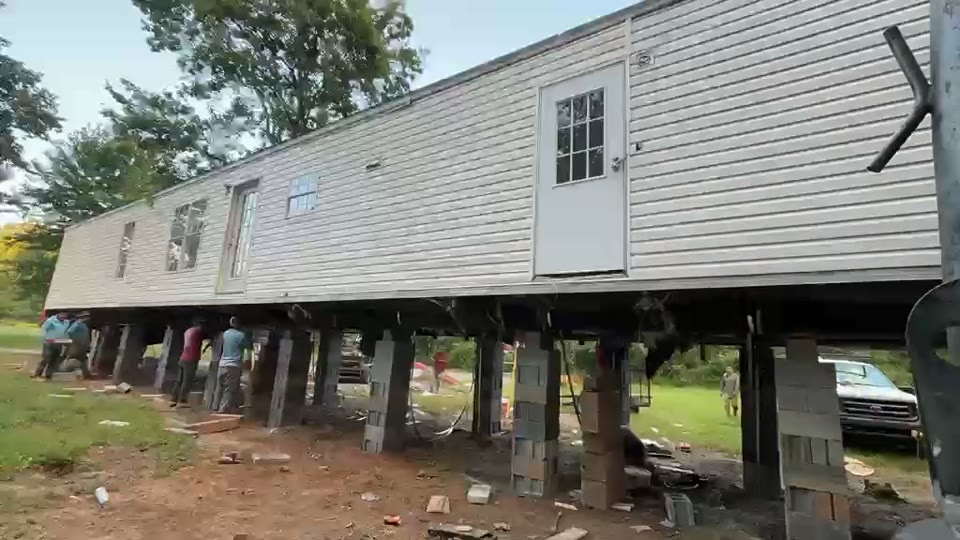
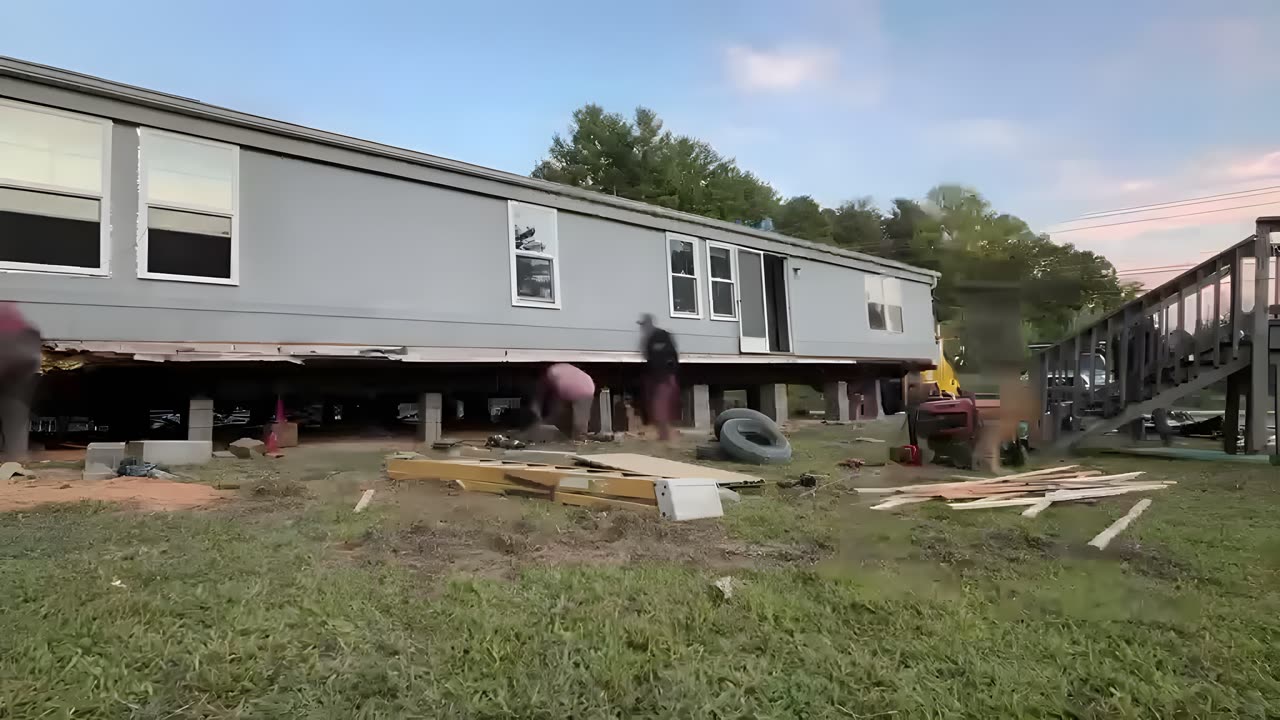
Blocking and leveling precede anchoring, and they matter more on Buncombe County lots than on flat-state installs. A home blocked on an uneven grade without accounting for slope will settle unevenly over the first few seasons, creating floor bounce, sticking doors, and alignment problems that require correction. The re-leveling page covers what that correction process involves when a home needs adjustment after the fact. Getting the blocking right at the initial installation, with a proper site assessment and graded pads where needed, is considerably less expensive than the correction. The complete scope from site prep through utility connection is on the setup and installation page.
Storm history and where the home sits on the lot
Buncombe County carries 19 federally declared disasters on record spanning 1973-2026, with the most recent events including a Winter Storm in 2026, a Tropical Storm in 2024, and Hurricanes in 2023, 2021, and 2020. Each of those events put manufactured homes across this county under wind and water stress. Well-anchored homes with proper drainage and deliberate siting handle that stress better than homes placed without attention to surface water and prevailing exposure.
The National Weather Service tornado guidance for mobile homes is direct: manufactured homes offer significantly less protection than site-built structures in severe wind events, and residents should have a standing plan to reach a sturdy shelter quickly. Where the home sits on the lot — its orientation relative to prevailing storm track and its drainage relationship to the surrounding grade — is a siting question that belongs in the setup conversation, not a decision made after the home is already in position. A mover who only thinks about getting the unit placed is leaving that question unanswered.