What re-leveling a home along the US-25 corridor actually costs
Flat Rock is a village tucked into the Blue Ridge foothills of Henderson County, about four miles south of Hendersonville on US-25. The manufactured home stock here has its own character: older park communities dating to the 1970s and 1980s along the east side of the Greenville Highway corridor, private lots on rolling terrain where homes sit on original pier systems that have never been professionally reassessed, and a steady flow of homes that arrive after being moved from elsewhere in the mountains. Henderson County's clay-heavy subsoil absorbs and releases moisture with every wet season; the county has seen 16 federally declared disaster events between 1978-2026 and 2026, mostly storm and flood family, and each event pushed water at foundations and pier systems built for dryer assumptions.
The price question comes first because scope drives cost more than home size does. Typical market ranges for Flat Rock re-leveling:
| Scope | Typical Range |
|---|---|
| Single-wide, minor adjustment (1–4 piers) | $400 – $800 |
| Single-wide, full re-level (most piers) | $750 – $1,200 |
| Double-wide, minor adjustment | $700 – $1,100 |
| Double-wide, full re-level | $1,100 – $2,000 |
| Individual pier or pad replacement (per unit) | $150 – $350 |
| Full pier system replacement, single-wide | $2,500 – $4,000 |
| Full pier system replacement, double-wide | $3,200 – $5,000 |
Pier condition is the dominant price driver. A re-level that reveals cracked pads or buckled piers becomes a replacement job and lands at the upper end of the range. The slope of the lot setback, how long the home has been running unlevel, and soil moisture at the time of the job all affect where the scope lands. The full Henderson County leveling cost breakdown covers regional line-item differences in detail.
What an unlevel home shows you first
Most Henderson County homeowners notice the floor before anything else. A soft spot or pronounced bounce in the center of a double-wide is the most common first sign; the middle piers on clay-heavy lots settle faster than the outer piers, and the center span becomes the tell. Exterior doors that drag at the top or fail to latch on one side, skirting that has pulled away from the home's underside at ground level, and diagonal cracks tracking from window corners in drywall or paneling are the other common indicators. Any crack that was closed last fall and has opened to a visible gap by spring is active movement, not old settling.
Moisture compounds every symptom. Homes in low spots in older Flat Rock parks collect standing water under the frame after heavy rains. Wet concrete pads compress faster than dry ones, and the subsoil underneath compresses faster still. A wet season that soaks the ground for weeks followed by a dry summer that contracts the clay is the cycle that moves piers without any single dramatic event. Henderson County's storm history delivers that cycle reliably.
The National Weather Service mobile home tornado safety guidance notes that a properly leveled and anchored home performs differently in high-wind events than one that has settled unevenly. In a county that has seen declared hurricanes and tropical storms in recent years, level condition and anchor condition are not two separate questions.
How leveling gets done: piers, blocking, and tie-down geometry
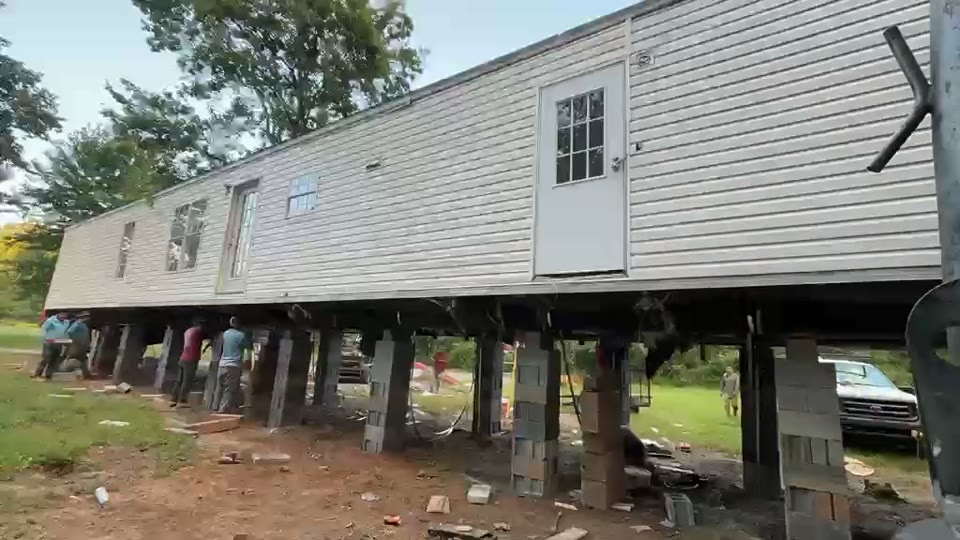
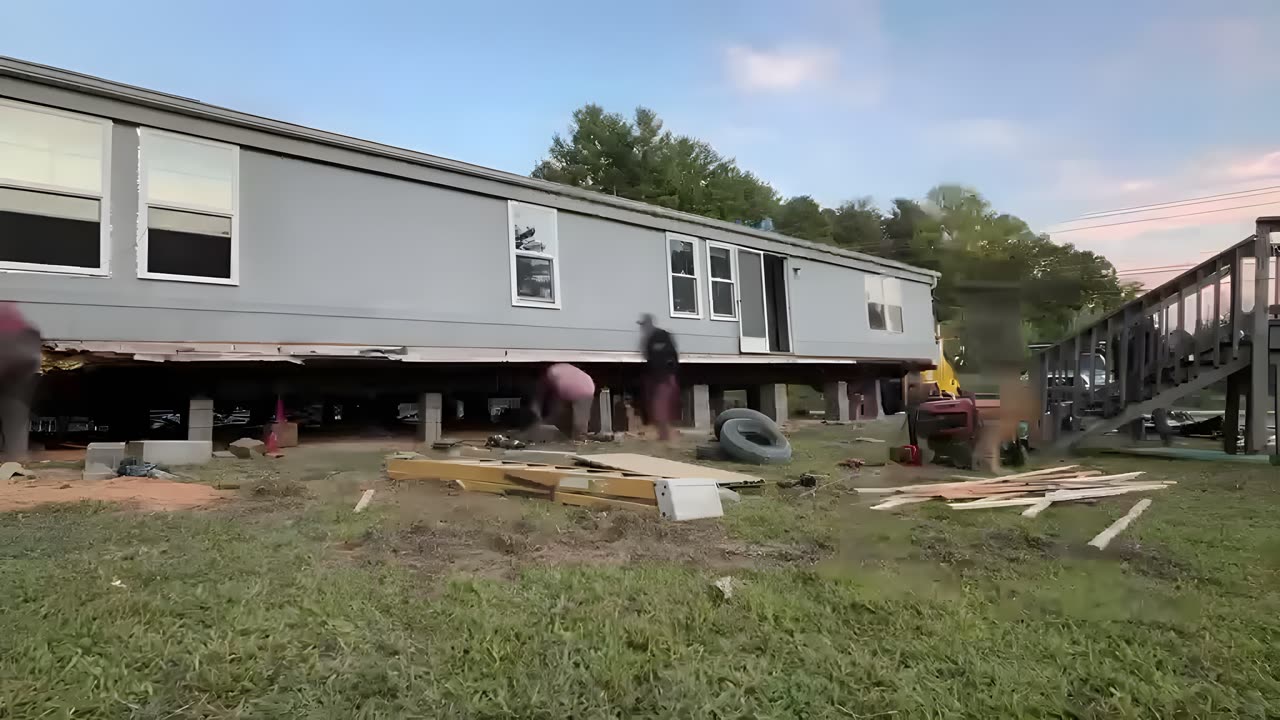
A proper re-leveling starts beneath the home, not at the door. Before a jack gets positioned, a complete crawl-under inspection checks every pier for plumb and solid pad contact, every concrete pad for cracking or downward sink, and the main beam for mid-span sag. On double-wides, the marriage wall line gets separate attention; those center piers carry the most load and settle most often on sloped lots. Soft spots in the floor above a pier are a flag to look harder at what is underneath before any load is shifted.
Henderson County falls in HUD Wind Zone I under 24 CFR 3280.305, the federal standard governing anchor and tie-down design for manufactured homes in this part of North Carolina. Wind Zone I is the baseline designation, but that does not make anchors optional: it defines the minimum anchor spacing and strap specifications that apply throughout this county. A re-level that changes pier height changes the geometry the tie-down anchors were set against. A crew that adjusts height without rechecking anchor tension has left the job incomplete. The HUD Office of Manufactured Housing Programs publishes the installation standards licensed contractors are required to follow; the NC Manufactured Housing Board administers the state licensing framework that applies to this work in North Carolina.
For homes where piers have failed outright, the job shifts from adjustment to replacement: new concrete pads set to depth, new steel or concrete piers installed to grade, and a full re-level from the main beam outward. That scope is what puts a job in the $2,500–$5,000 range. The re-leveling service page walks through the full sequence for both adjustment and replacement jobs.
Moves into and out of Flat Rock: why the post-move inspection matters
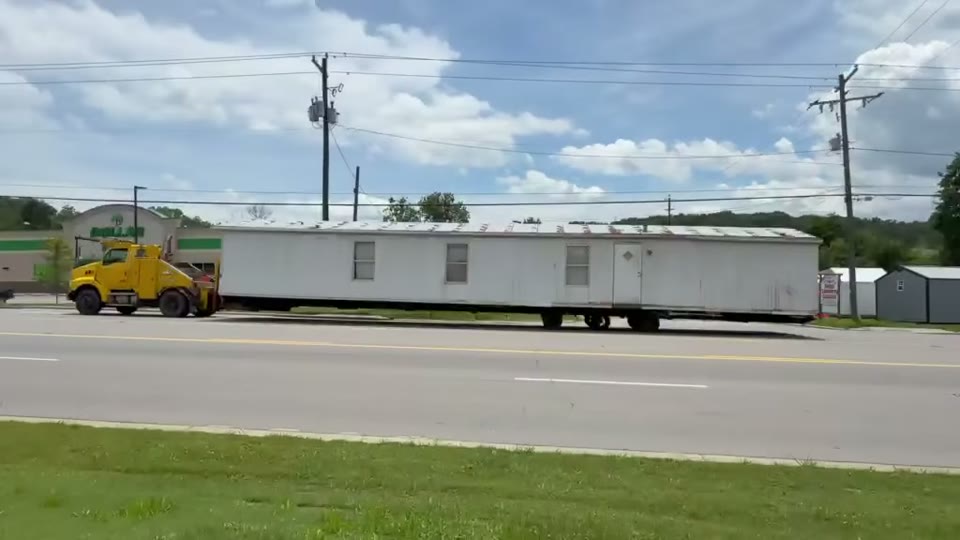
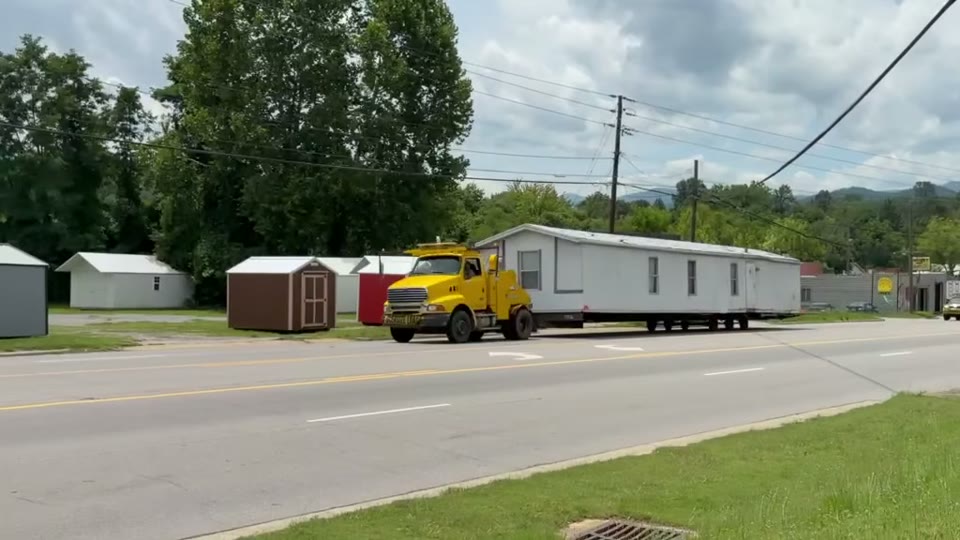
A significant share of re-leveling calls in the Flat Rock corridor come from homes that were recently moved — from Flat Rock to Sylva, in from Cherokee, or between parks within Henderson County. Every road move changes the relationship between the home's frame and whatever pier system gets built under it at the destination site. Frame twist accumulated in transit does not always announce itself at installation; it commonly appears six months to a year later, when one end of the home reads out of level while the other stays flat, or when a door that closed correctly at setup starts dragging.
Before any home moves on North Carolina roads, NCDOT Publication MH-2 governs the oversize and overweight move permit requirements for mobile and modular homes. That permitting step is separate from the installation work at the destination site. The full setup and installation guide covers what the post-move sequence looks like from site prep through final anchor inspection. A home that was last leveled at its previous site carries none of that level to the new one: the pier geometry appropriate to a lot in Flat Rock is not the pier geometry appropriate to a lot in Sylva, even for the same home on the same frame.
What to ask before a crew gets under your home
Three questions cover most of what goes wrong on Henderson County leveling jobs. First: ask whether the contractor is licensed by the NC Manufactured Housing Board. Re-leveling that includes pier replacement falls within the licensed scope of manufactured housing installation work in North Carolina; unlicensed contractors performing that work operate outside the state's consumer protection framework for this category. Second: ask how pier condition gets documented before the jack goes in. A photograph of each pier before work begins is not overhead: it is the record that resolves any question about what was already failed versus what was disturbed during the job. Third: ask whether tie-down tension gets checked after any height adjustment, and get the answer before the crew starts.
Henderson County's storm record is recent and real. The county has seen declared weather events including a hurricane in 2023, a tropical storm in 2024, and a winter storm in 2026. Homes that did not receive a post-event inspection after any of those seasons may carry pier systems that look fine from the living room floor and show slippage underneath. The Henderson County cost breakdown includes notes on what a post-storm scope assessment typically adds to a standard re-leveling job.