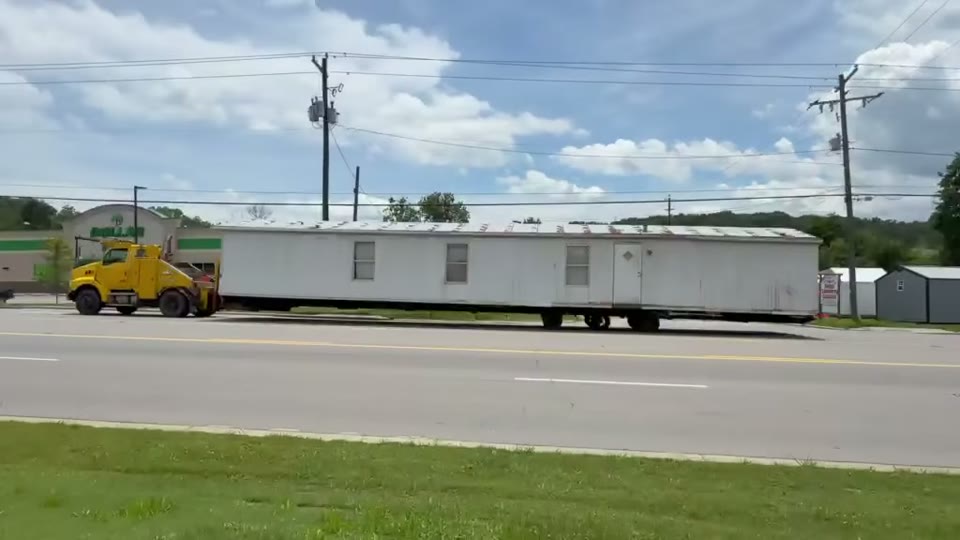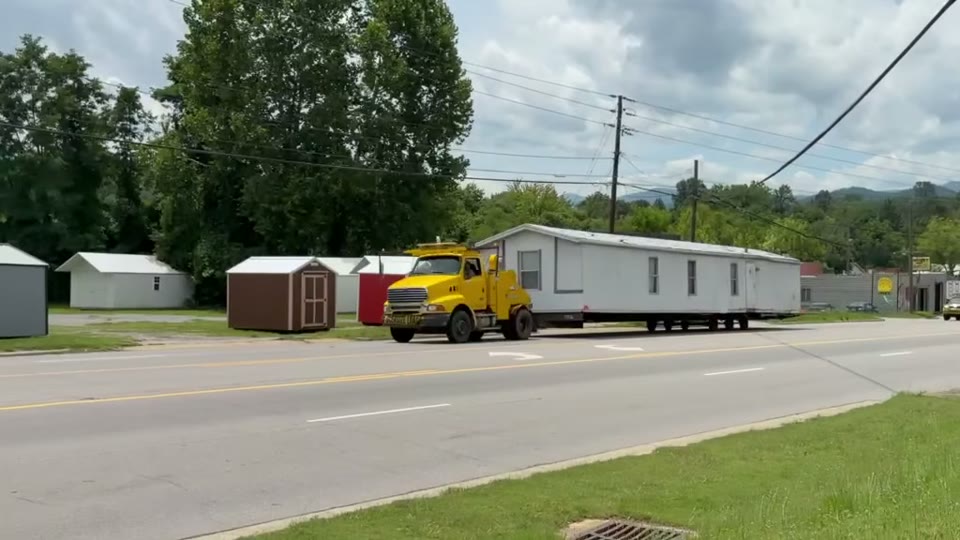
The document that stops the truck — North Carolina's tax-clearance rule
Buncombe County's ridgelines and river valleys hold a substantial share of western North Carolina's manufactured housing stock, and every home that moves legally must clear two separate permit steps before the transport truck backs up to it. The one most homeowners never anticipate has nothing to do with the road.
Under N.C.G.S. Chapter 105, Article 18 (§ 105-316.1), anyone other than a licensed manufacturer or retailer must obtain a tax permit from the tax collector of the county where the home currently sits before it can be moved. The permit certifies the home carries no outstanding property tax liability in that county. Buncombe County holds a secured tax claim against manufactured homes assessed as personal property; a move without cleared taxes lets that claim follow a home whose new location the county may never find.
The tax permit is displayed near the license tag at the rear of the home for the entire trip. Licensed motor carriers and licensed manufactured housing retailers are exempt from the obligation to obtain the permit themselves — but the transporter must verify it is properly displayed before the move begins. A home without that permit visible at the rear does not legally move.
| Document | Issued by | Who must obtain it | Required during move |
|---|---|---|---|
| Tax Permit (N.C.G.S. § 105-316.1) | Tax collector, county where home currently sits | Owner or homeowner — licensed carriers and retailers exempt from obtaining, not from verifying display | Displayed near license tag at rear of home |
| NCDOT Oversize Permit (Publication MH-2) | NCDOT | Transporting carrier | Carried in cab; route-specific |
| Setup/Installation Permit | County building inspections (or NC Manufactured Housing Board jurisdiction) | Owner or licensed setup contractor | On-site during installation |
The road permit: what NCDOT Publication MH-2 covers
Once the tax permit is confirmed, the transporting carrier needs an oversize permit for the road. Manufactured and modular homes on NC public roads require a permit issued under NCDOT Publication MH-2 — Mobile and Modular Home Permits. The permit belongs to the carrier, not the homeowner, but homeowners benefit from understanding what it controls before the move date is set.
Several features of Publication MH-2 matter specifically for moves in and out of Asheville NC:
- Route approval, not just cargo approval. NCDOT approves a specific path, not just the load dimensions. On mountain routes through Buncombe County, bridge weight ratings, road widths, and sharp switchbacks can force the carrier to request an alternate route — and that approval takes time that is not in every carrier's standard scheduling window.
- Single-wide vs. double-wide. A single-wide typically moves as one permitted load. A double-wide is two structural sections; each section needs its own permit and generally moves on separate trips.
- Pilot car and escort requirements. Width and height determine how many escort vehicles are required and where they position relative to the load. Most western NC routes require at least one pilot car ahead.
- Travel time restrictions. Most oversize moves are restricted to daylight hours on weekdays. Specific mountain routes carry additional Sunday restrictions. Seasonal road conditions — after heavy rain or winter weather — can affect route availability on short notice.
For single-section homes, several steps in this sequence simplify. The single-wide movers page walks through how the narrower permit footprint of a one-section home affects cost and timeline from permit to final hookup.
Setup in Buncombe County: the permit that governs arrival
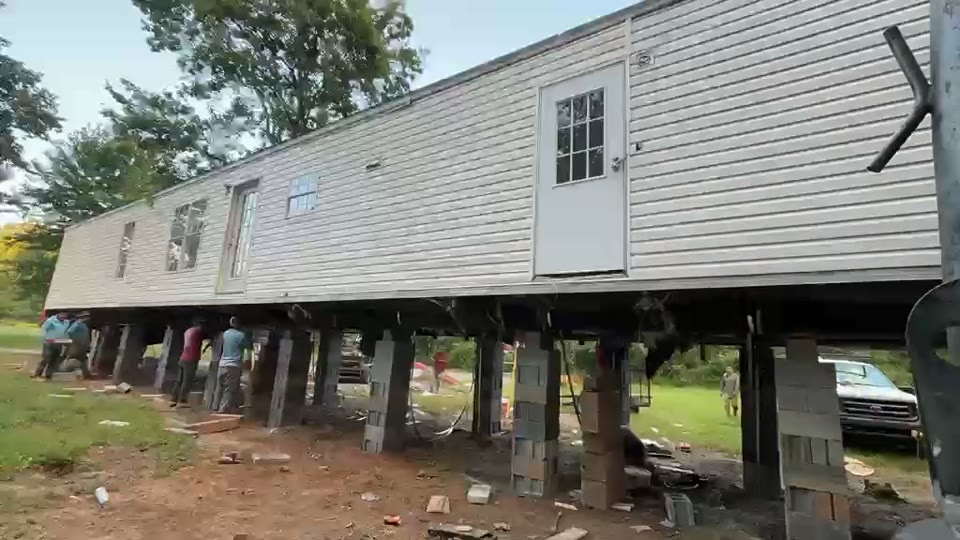
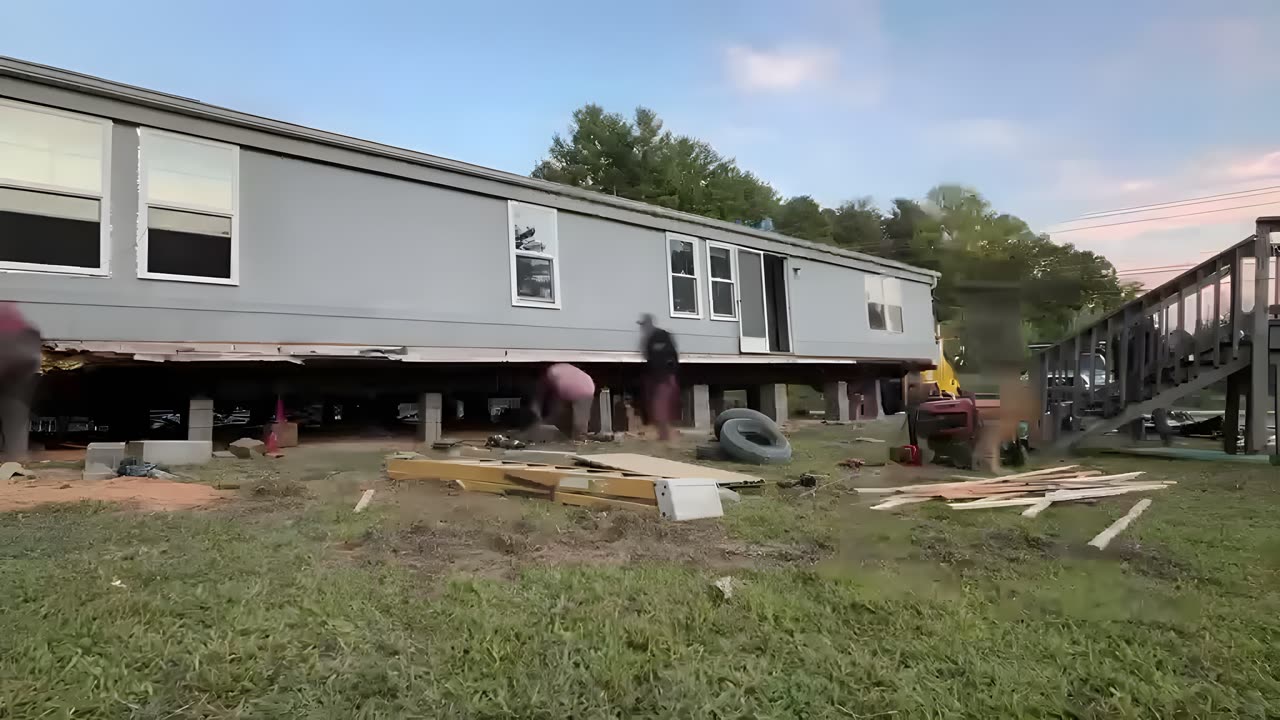
After the home reaches its new site, a third permit layer begins. Installation of manufactured housing in North Carolina falls under the licensing and inspection authority of the NC Manufactured Housing Board (NC Office of State Fire Marshal). The setup contractor must hold an active state license; installation requires a permit and at least one inspection before the home can be occupied.
Wind zone classification governs the installation specifics. Buncombe County is designated HUD Wind Zone I under 24 CFR 3280.305 (HUD Manufactured Housing Program standards). Zone I covers the NC mountain interior and sets minimum requirements for pier spacing, anchor type, and tie-down configuration. The installer works from the manufacturer's installation manual cross-referenced against the zone table — where those requirements differ, the more stringent governs.
Weather history adds real weight to the inspection checklist in this county. Buncombe County has recorded 19 federal disaster declarations over 1973-2026, including a Hurricane (2023), Tropical Storm (2024), and Winter Storm (2026). Inspectors who have worked this county through major weather events pay close attention to tie-down spacing and foundation block stability. The National Weather Service tornado safety guidance specifically flags manufactured homes as higher-risk in severe weather and emphasizes advance shelter planning — a home anchored correctly at setup is the first line of that defense, not an afterthought.
Homes placed on permanent foundations follow a separate track: reclassification from personal property to real property changes how a home is taxed, titled, and financed. That process runs through the county Register of Deeds and tax assessor and begins with a setup meeting the permanent-foundation standard — but its permit and inspection sequence is distinct from the moving permit chain described here.
What the full permit sequence typically costs in western NC
The permits themselves are a small line item against the total cost of a move. The table below reflects typical market ranges for moves within or into Buncombe County. Actual quotes depend on distance, site conditions, home dimensions, and contractor availability — these are regional bands, not fixed prices from any single company.
| Scope | Typical range |
|---|---|
| Tax permit (county tax collector) | No fee or minimal administrative cost |
| NCDOT oversize permit (per section) | Under $100 for most single-trip permits |
| Setup/installation permit | $150–$500, depending on county fee schedule |
| Single-wide local move (under 50 miles) | $1,500–$4,500 |
| Double-wide local move (under 50 miles) | $3,500–$9,000 |
| Long-distance move (50+ miles) | Priced by mile and route complexity — request a line-itemed quote |
| Utility disconnection and reconnection | $500–$2,500 depending on services involved |
Henderson County to the south of Buncombe has its own inspections department and fee schedule for the setup permit phase. The Henderson County mobile home permits page covers those specifics for moves crossing that county line.
Buncombe County terrain: why mountain moves need more lead time
Asheville NC sits at the convergence of I-26 and I-40, which makes it a reachable regional hub — but much of Buncombe County beyond the urban core is different territory. The county spans from the French Broad River valley floor to ridgelines above 4,000 feet, and road conditions can change sharply within a few miles. A move that looks straightforward on a map can require a route change, a crane lift, or a reschedule once the carrier scouts the actual access road.
Several issues that are uncommon in Piedmont or coastal moves arise routinely in Buncombe County:
- Private road access. Many rural lots in Buncombe County are served by private roads not built for the width or grade tolerance of a loaded transport. Discovering the problem on move day means a costly crane or a reschedule — either is more expensive than a drive-by site visit before booking.
- Zoning and deed restrictions. Parts of Buncombe County carry zoning overlays or deed restrictions that limit where manufactured homes can be sited. Verify placement eligibility with the county planning department before committing to a lot purchase.
- Utility coordination and lead time. Electrical disconnection requires utility company notification and a licensed electrician. Water, septic, and gas have separate contractor sequences. Licensed trade contractors in mountain communities stay booked; scheduling 3–4 weeks out is more reliable than last-minute calls.
- Seasonal scheduling windows. Winter weather and post-storm road conditions narrow the viable window for oversize moves on mountain routes. Moves planned for November through March may face tighter NCDOT travel-time rules and reduced carrier availability.
For the full regional picture of what a move across western NC involves from permit clearance through final utility hookup, the western NC mobile home moving guide covers the end-to-end sequence across the mountain counties.