Grading the pad: Asheville NC lots almost never arrive level
Most residential parcels in Buncombe County ask the same question before a manufactured home can be set: where is level, and how much work does it take to get there? Asheville NC sits inside a ring of ridges and hollows, and the typical lot — whether it is off Leicester Highway, up the slope from Swannanoa, or tucked into a draw in Fairview — carries grade that was shaped for something other than a manufactured home. Cut-and-fill lots are common, and fill graded for a driveway or a conventional slab does not compact the way a manufactured home's concentrated point loads require.
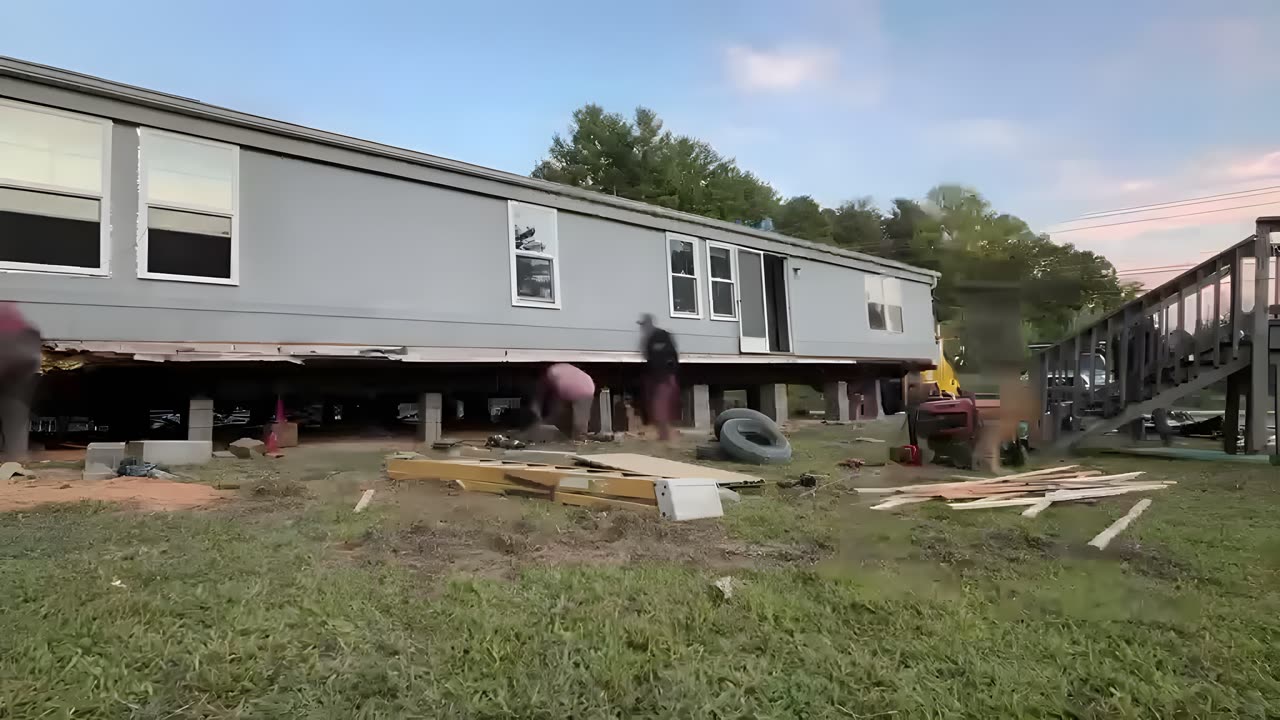
Establishing the building pad means identifying the finished floor elevation, cutting back the high side where needed, and building up the low side with material that can be compacted to bear the home's weight without future settling. Then the drainage work begins. A manufactured home pad needs to shed surface water away from the foundation on all four sides, and the path that runoff takes once it leaves the pad needs to be designed, not assumed. The grade work and the drainage plan are the foundation of the foundation. A full walkthrough of that sequence is at grading and footers for manufactured homes.
Footer types and what the site requires
Once the pad is established, the footer choice follows from what the site and the home actually need. Three configurations cover most Asheville NC manufactured home foundations, and each one fits a different set of conditions.
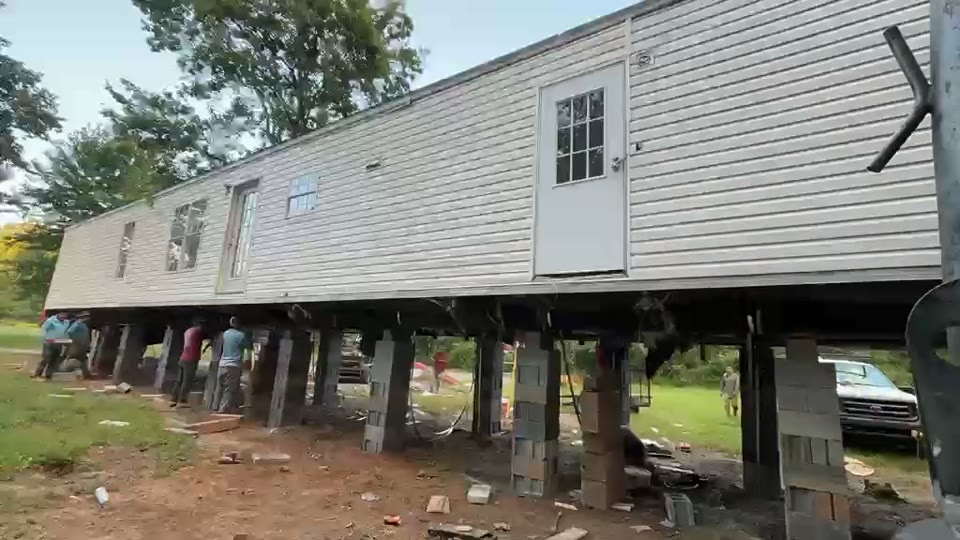
Concrete block piers on individual footings are the baseline approach for single-wides and double-wides on stable, well-drained ground. Each column sits on a poured concrete pad sized to distribute the home's point load across enough bearing area to resist settlement. This is the most common setup in Buncombe County and typically the least expensive.
Continuous concrete runners run beneath the main chassis rails and spread load over a longer bearing surface. They are the right call on variable or previously disturbed soil, on lots where the pad was built up with fill, and wherever the inspector wants to see distributed bearing rather than concentrated point loads. Runners add cure time to the schedule but are the appropriate choice on the sites that need them.
Full concrete slabs are the highest-cost option and come up most often under double-wides where grade variation across a wider pad makes it harder to keep individual piers consistently level, or where a permanent-style platform is the goal. Western North Carolina's frost depth is modest by northern standards, but footers in every category must bear on undisturbed or properly compacted soil below any organic layer. The NC Manufactured Housing Board (NC Office of State Fire Marshal) sets the installation standard governing footer sizing, pier spacing, and bearing requirements that Buncombe County inspectors check against at every installation.
What site prep costs in Asheville NC
The ranges below cover grading and foundation scope only. Utility connections, driveway approach, and skirting are separate line items. Slope and soil condition are the biggest price movers in Buncombe County: a flat, well-drained lot on the valley floor and a steeply graded ridge lot on the same road can price at opposite ends of the same range.
| Scope | Typical range |
|---|---|
| Block piers on pads, single-wide, relatively level lot | $2,000–$3,500 |
| Graded pad with concrete runners, single-wide | $3,000–$5,000 |
| Block piers, double-wide, moderate grade | $3,500–$6,000 |
| Graded pad with drainage and retaining work, runners, double-wide | $5,500–$8,000 |
| Full concrete slab, double-wide | $10,000–$15,000 |
For a statewide comparison and a line-item breakdown of each scope, see mobile home footer costs across NC. Any quote that does not begin with a site visit is missing the input that actually drives the number — slope and soil are not estimable from an address alone.
What the county requires before the home arrives
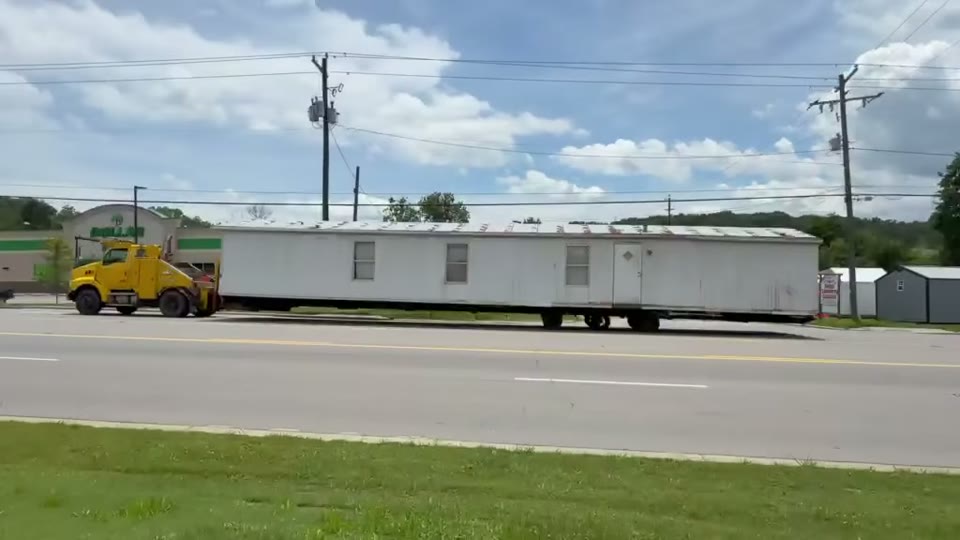
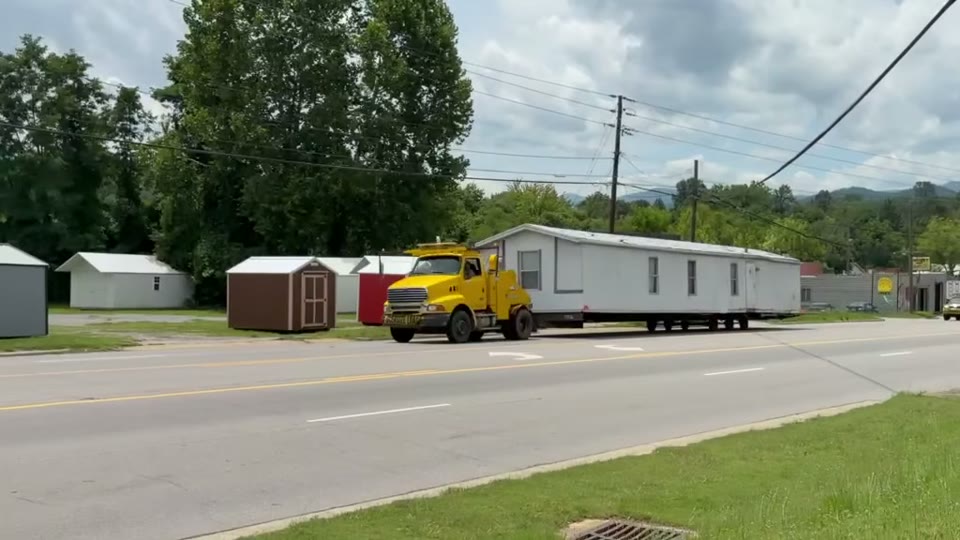
Setting a manufactured home on a Buncombe County parcel runs on two parallel tracks: permits for the road move and permits for the installation site.
On the road side, NCDOT requires an oversize permit for any manufactured home transported on NC public highways. Publication MH-2 covers those requirements in detail. A separate tax-paid moving permit under NCGS Chapter 105, Article 18 confirms that property taxes on the home are current before it changes location. Skipping the tax permit creates a lien issue that surfaces when the home is later sold.
On the site side, Buncombe County Permits and Inspections (located at 35 Woodfin St. in Asheville NC) processes manufactured home permits for unincorporated county parcels. The application requires proof of water and sewer service: a utility letter or meter receipt for homes on public service, a county well authorization for homes on a private well, and either an MSD approval letter or a county septic authorization for homes not connecting to the public sewer system. Homes sited inside Asheville NC city limits or inside Black Mountain's town limits go through those municipalities' permitting offices rather than the county. The complete installation and inspection sequence is at manufactured home installation in Asheville NC.
Wind Zone I, anchoring, and the complications of slope
Buncombe County sits in HUD Wind Zone I under 24 CFR 3280.305 — the lowest wind exposure classification for manufactured housing. Zone I carries mandatory anchor and tie-down requirements; it sets a floor, not an exemption, and the NC Manufactured Housing Board's state installation rules add requirements on top of the federal baseline.
Slope creates complications that flat-lot anchor specifications do not account for. An anchor bearing into fill material on the downhill side of a graded pad does not achieve the same pullout resistance as one set in undisturbed soil on level ground. Anchor layout and site-prep design need to be coordinated on any lot with meaningful grade — treating them as independent jobs is the most common setup problem on steep Buncombe County parcels.
Storm history and what it means for drainage in Buncombe County
Buncombe County carries 19 federal disaster declarations on record over 1973-2026, a span that includes Hurricane (2020), Hurricane (2021), Hurricane (2023), Tropical Storm (2024), and Winter Storm (2026). Each of those events pushed water at foundations built for a quieter assumption, and the manufactured home sites that fared worst were the ones where drainage was treated as an afterthought.
For a mobile home foundation in Asheville NC, drainage specification should account for the top of what this county actually sees in a hard year, not just the seasonal average. Surface water that cannot move away from the pad saturates the bearing soil, softens footer support, and starts the settlement process that later shows up as a bouncing floor or a door that will not latch. Getting the drainage right at the site-prep stage costs far less than remediating after the first serious storm season.