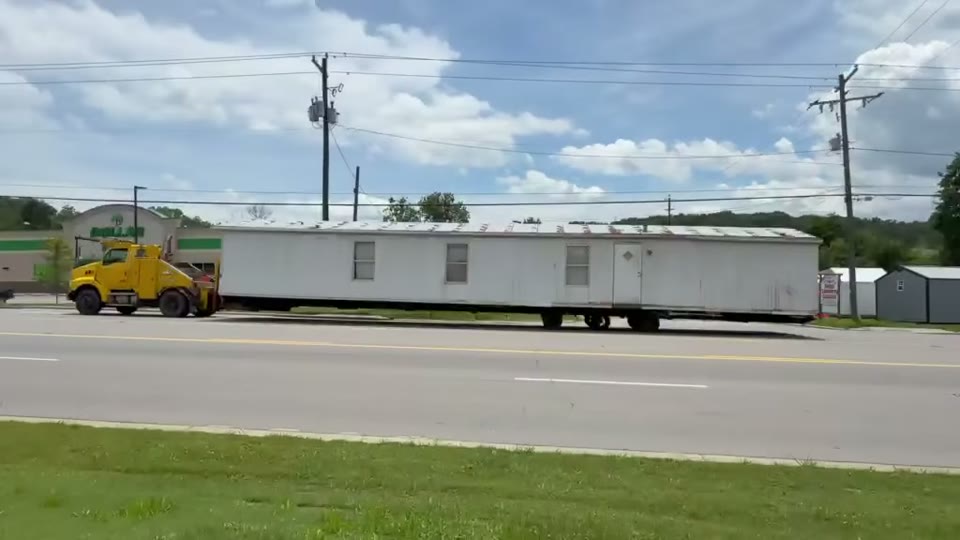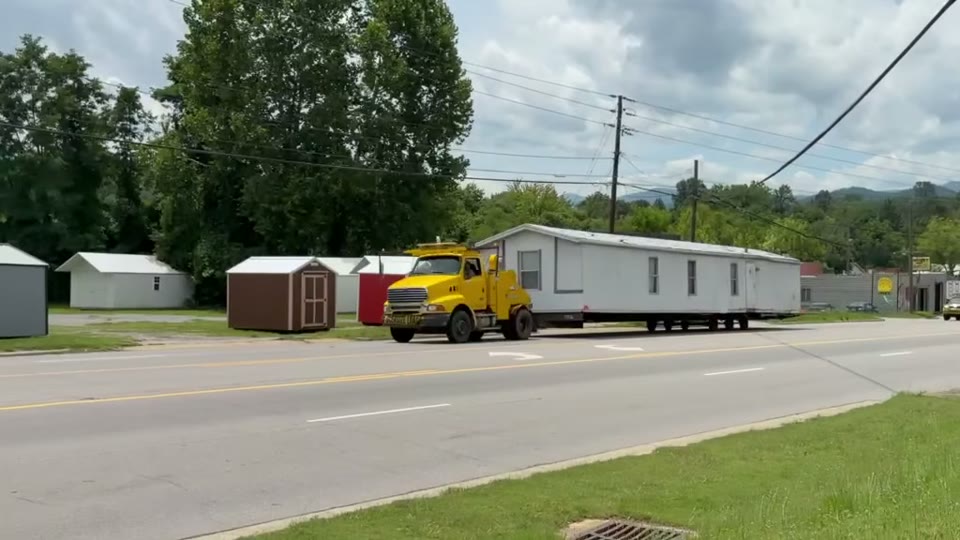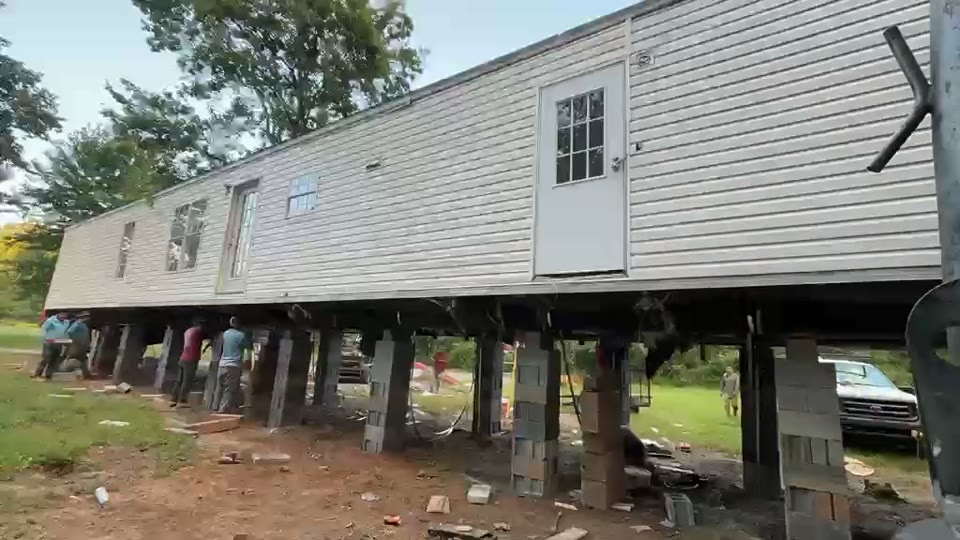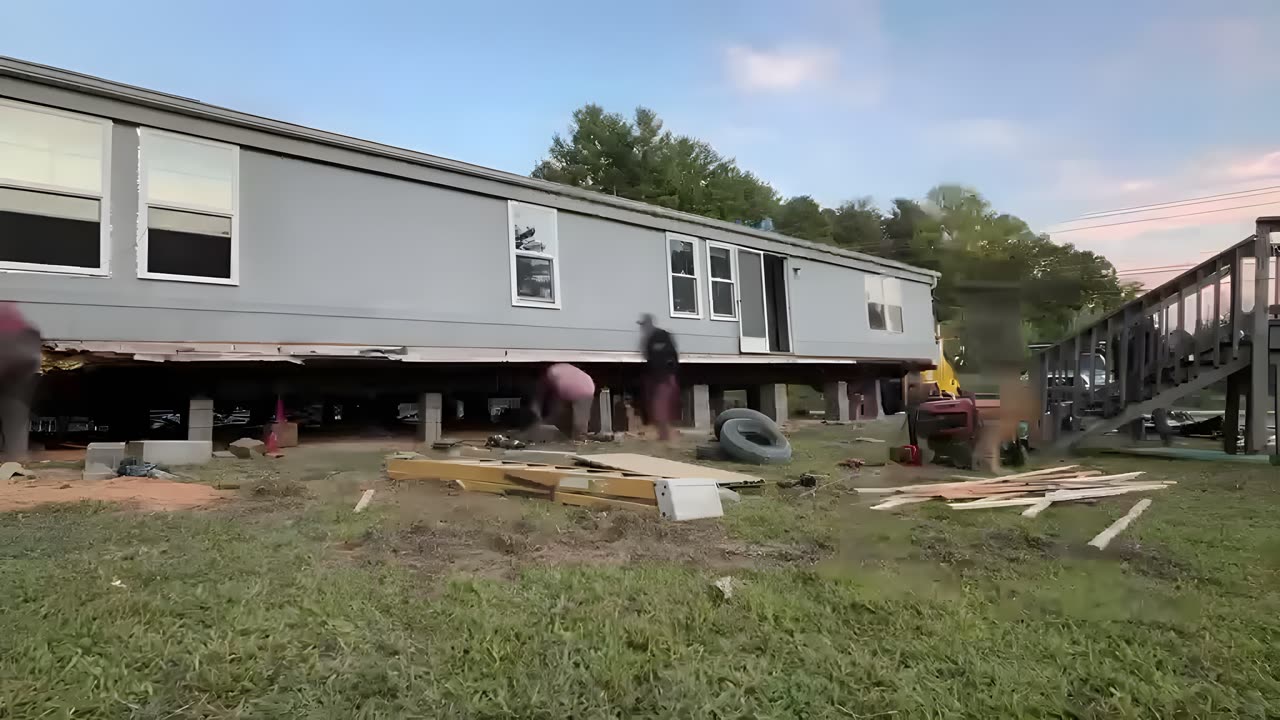
What the work costs on a Buncombe County lot
Ridge topography is the first variable any installation crew prices in Buncombe County. A level pad at a manufactured housing community off the French Broad corridor sets entirely differently than a private lot carved into slope above Weaverville or east of Black Mountain — both go through the same permit process, but the labor and material to match a home to the grade are not the same. The table below shows how scope moves price inside the typical market range for Asheville NC.
| Scope | Typical range |
|---|---|
| Single-wide set, level lot, standard pier count | $1,500 – $2,200 |
| Single-wide set, sloped lot or extended blocking required | $2,200 – $3,000 |
| Double-wide set, level lot | $3,000 – $4,500 |
| Double-wide set, sloped or ridge lot | $4,500 – $6,000 |
| Skirting installation (basic vinyl, perimeter) | $600 – $1,500 |
Utility stub-out connections — water, sewer, and electrical service entrance — carry their own labor and material costs beyond these ranges and vary with the distance from the street or well. The full NC installation cost guide breaks out each line item.
The sequence from first block to certificate
Installation begins the morning after the home reaches its permanent lot — not before. The sequence is fixed by both the manufacturer's installation manual and state oversight: site layout, footing and pier placement, the home set onto its support system, blocking and leveling to specification, then engineered tie-down and anchoring before any utility connection begins. Inspections trigger at specified stages; compressing that sequence to save a day creates re-work and can void the inspection record.
Pier spacing, depth, and footing size follow the home manufacturer's installation instructions, which travel with the HUD data plate on every home built to federal standards. A crew that asks to see the data plate and installation manual before the first footing is poured is worth keeping. The complete setup and installation guide covers what a full, inspectable installation includes from piers to skirting.
Skirting closes the perimeter after anchoring passes inspection. On Buncombe County lots in the hollows and north-facing ridges around Asheville NC, cold air pools at grade in winter — skirting is functional protection for the undercarriage, not cosmetic trim. Leveling is not a one-time event on mountain ground; settlement over the first heating season is normal. If any pier movement is found, the installation standard requires a re-level. The Asheville NC leveling page explains when that work is triggered and what it covers.
Permits, jurisdiction lines, and what the application needs
Where the lot sits determines where you file. Buncombe County Permits and Inspections — at 35 Woodfin Street in Asheville — handles manufactured home permits for unincorporated Buncombe County and many of the smaller surrounding communities. Inside the Asheville NC city limits, the City of Asheville runs its own permitting process. Black Mountain manages permits inside its own town boundary. If an address falls near a town line, confirming the correct jurisdiction before filing saves a trip.
Every application needs proof of utility service at the site. Inside city service areas that means a utility connection letter or active meter account from the water and sewer provider. Outside city service, a county well authorization or county septic authorization substitutes. Those documents go in with the application — not after the permit is issued. The Metropolitan Sewerage District serves much of urban Asheville NC; county environmental health handles septic for parcels outside that service territory.
The contractor performing the installation must hold a license issued through the NC Manufactured Housing Board, administered by the NC Office of State Fire Marshal. Asking for a current license before the job begins is standard due diligence. The home's haul to the lot separately requires a tax-paid moving permit under NCGS Chapter 105, Article 18, and any oversize load on NC public roads requires an NCDOT permit under Publication MH-2.
Wind zone anchoring on Buncombe County lots
Buncombe County is classified HUD Wind Zone I under 24 CFR 3280.305 — the lowest of three federal zones. Zone I still requires a complete engineered tie-down system sized to the home's dimensions and matched to the soil conditions at the site. The classification does not mean anchoring is minimal; it means the specification was calibrated to the wind loads this county's documented history has actually produced.
That history is real. Buncombe County has 19 federally declared disaster events on record spanning 1973-2026, including Hurricanes in 2020, 2021, and 2023, a Tropical Storm in 2024, and a Winter Storm declaration in 2026. A tie-down system installed in Asheville NC should be rated for that record. Anchor type, spacing, and diagonal-strap placement are all specified in the home's installation manual; the inspector verifies conformance before the final certificate is issued. Over-anchoring can rack a home's frame; under-anchoring fails in a high-wind event. Following the specification exactly is the standard, not an approximation.
Utilities and the final sign-off
After anchoring inspection passes, utility connections go in. Water, sewer, and electrical each follow their own code path. The home itself arrives certified to federal construction standards administered by the HUD Office of Manufactured Housing Programs; the site connections must meet North Carolina's adopted codes, maintained by the NC State Building Code Council.
Electrical connection from the service entrance to the home's distribution panel is licensed electrical work — a separate trade from the manufactured home installer. In unincorporated Buncombe County, that inspection runs through the county permit. Inside Asheville NC city limits, it runs through the city's process. Scheduling those inspections in the right order and under the right jurisdiction determines when the certificate of occupancy is issued. A home that has cleared setup, anchoring, and utility inspections in sequence carries a clean permit record — one that travels with the property on any future sale or refinance.