How McDowell County terrain shapes a leveling job
Marion sits at the foot of the Blue Ridge, where land shifts quickly from the Catawba River bottomland through the center of town to sharp hillside cuts heading toward Old Fort and the Lake James shoreline. That variety matters under a mobile home: a pad poured on bottomland clay compresses slowly under seasonal moisture and can hold level for years before showing a problem, while a cut-and-fill slope pad above town can shift an inch or two after a wet fall with little warning. A home on a steep McDowell County ridge lot and a home on the flatland south of Marion look the same from the road but fail for different reasons and at different rates.
Since 2019, McDowell County has recorded 524 permitted mobile and manufactured home jobs. That volume reflects a housing stock that is genuinely active here — homes are being set, relocated, and maintained across terrain that demands site-specific judgment every time. The lot underneath your home is as much a part of the repair scope as the piers themselves.
What re-leveling costs in the Marion area
The ranges below reflect typical market costs for McDowell County. Steeper lots toward the ridgelines or wet-season damage can push a job toward the top of its range; intact piers on accessible flat ground keep it near the bottom. For the full statewide context, see what mobile home leveling costs across NC.
| Job scope | Typical range |
|---|---|
| Single-wide re-level, piers and pads intact | $400 – $1,200 |
| Double-wide re-level, piers and pads intact | $700 – $2,000 |
| Full pier and pad replacement | $2,500 – $5,000 |
| Steep-lot access or bracing add-on | Site-specific; adds to above |
Any quote given without a site visit is a guess. Slope, soil type, and pier condition vary enough across McDowell County that an accurate number requires crawling underneath the home and taking measurements at multiple frame points — not a ballpark from a phone call.
The signs worth acting on
A home that needs leveling rarely announces itself all at once. The most common first sign is a door that swings open on its own, sticks in a corner of the frame, or stopped latching without any work recently done nearby. Soft or bouncy floor sections — especially in the center of a single-wide where the main beam runs — are a close second. Look along the skirting line: an uneven gap between the skirt panel and the ground, higher on one end than the other, is a reliable visual indicator that the home has moved. At window and door corners, diagonal cracks that were not there last season are worth measuring and monitoring monthly.
Movement that arrives and retreats with wet versus dry seasons is almost always soil moisture at work. Movement that only grows is structural. The first kind can sometimes be watched for a season before acting; the second kind should not be. For a closer look at what inspection and correction actually involves, see the re-leveling service overview and the setup and installation guide for what proper initial placement prevents over the long run.
How the job is done and what the rules require
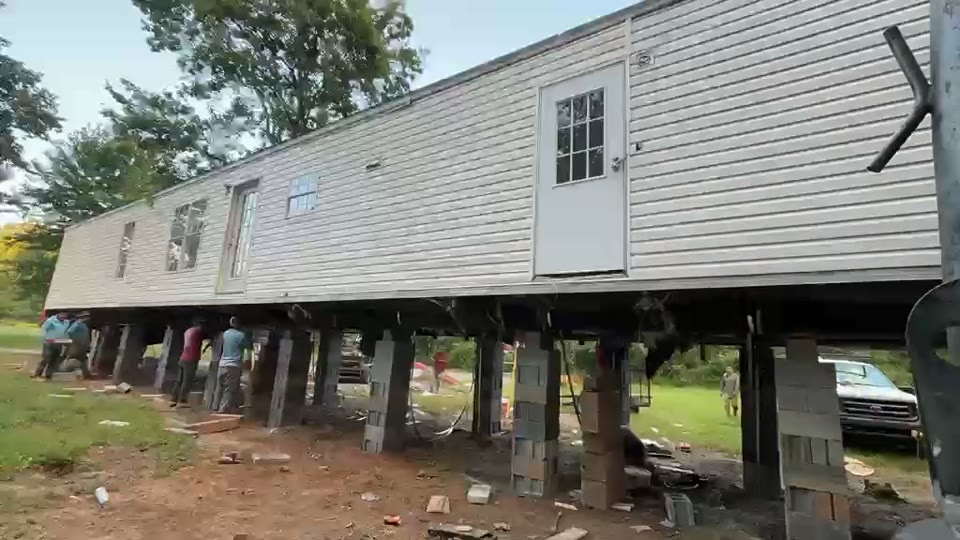
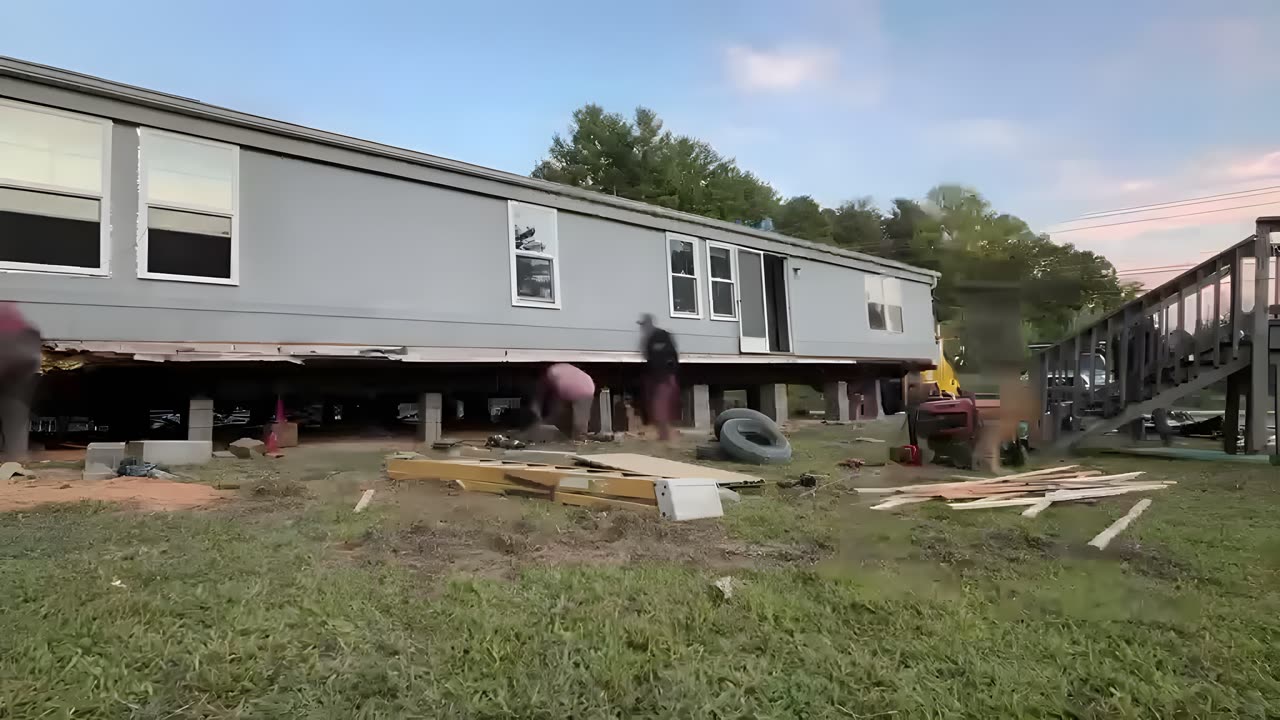
Re-leveling starts with a crawl under the home to assess pier and pad condition and take measurements at multiple points along the chassis frame. On a sloped McDowell County lot, that often means more pier-by-pier variation than on flat ground — some piers may be fully intact while others have cracked, sunk, or tipped. The crew adjusts support section by section, working from the low end toward the high, checking levels as they go. On a double-wide, the center marriage-wall line gets particular attention because both halves have to level relative to each other, not just to the ground independently.
McDowell County falls in HUD Wind Zone I under 24 CFR 3280.305, the base federal wind zone for the region. Any re-level that disturbs the anchoring system must restore compliance with those Zone I tie-down specifications before the job is closed out. The HUD Office of Manufactured Housing Programs publishes the installation standards that govern this work nationally; in North Carolina, the NC Manufactured Housing Board administers licensing and inspection requirements for the trade. Ask any crew you hire how they document anchor compliance after the work is complete — that documentation matters if the home is ever inspected for a sale or refinance.
Storm seasons and the case for acting before one
McDowell County has seen 19 federally declared disaster events spanning 1973-2026, including hurricanes in 2019, 2020, and 2023, a tropical storm in 2024, and a winter storm in 2026. Each of those events saturated soil around piers and pads that were built for normal conditions. A home that holds its level through a dry summer can show measurable shift by the following January after a storm season — not because the home itself failed, but because the soil and drainage beneath it did.
The practical takeaway: if you have noticed any of the warning signs above and a wet storm season just passed, having someone assess the situation now — before the soil dries and the visible movement settles back — gives a more accurate picture of how much shift actually occurred. The National Weather Service also notes that manufactured homes in open or exposed settings carry specific severe-weather safety considerations, which is a separate but related reason that proper anchoring after any leveling work is not optional in this county.
Re-leveling as part of a McDowell County home sale
A home that lists with a visible lean, soft floors, or sticking doors will flag on a buyer's inspection — and in a county where buyers often recognize sloped-lot settling on sight, those flags hand them negotiating room that costs the seller more than the repair would have. A re-level before listing is typically a $400 to $2,000 investment that removes a concrete line item from the inspection report and keeps the transaction on schedule.
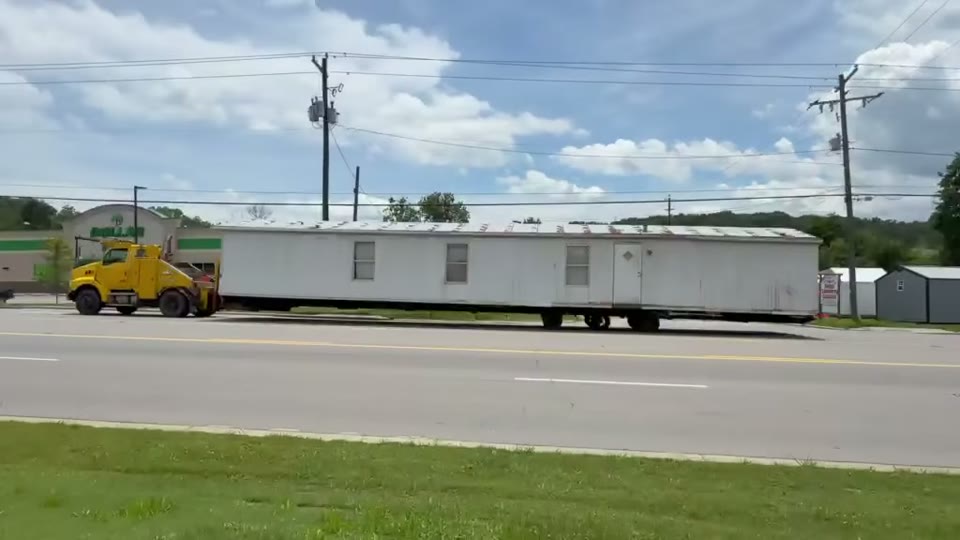
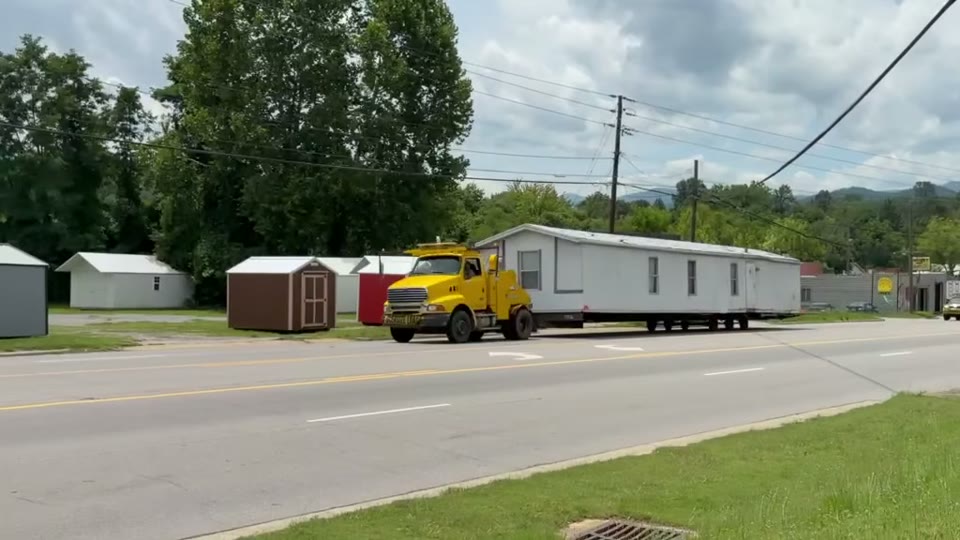
If the home is being relocated to a new lot as part of the transaction, an NCDOT oversize transport permit is required before it can move. The NCDOT MH-2 publication covers the permit process for mobile and modular home moves in North Carolina. Setup at the new location — including leveling and anchoring — starts fresh under the same HUD Wind Zone I specifications that govern the existing installation. The setup and installation overview walks through what a compliant new placement requires from the ground up.